


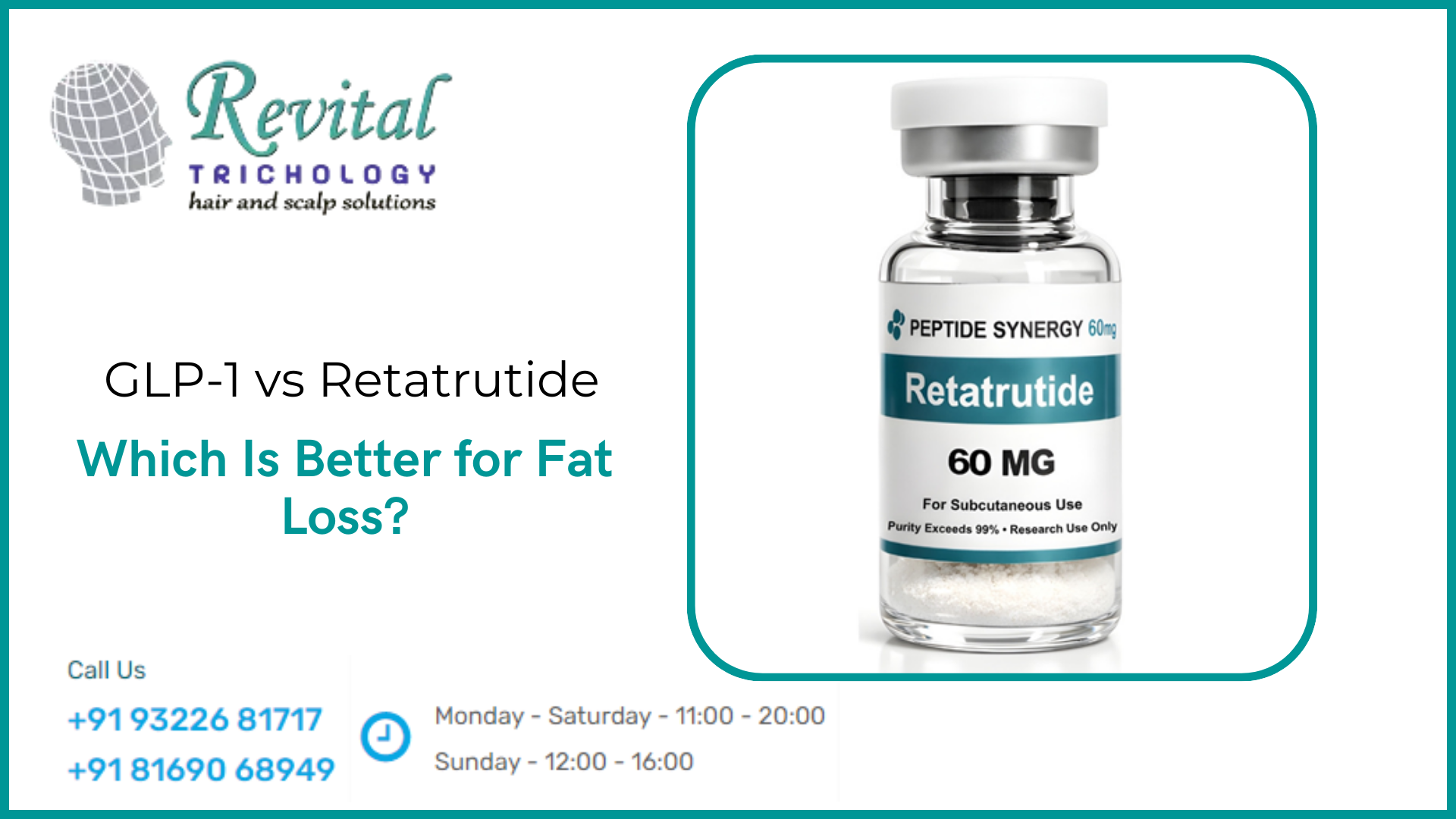
GLP-1 vs Retatrutide for Fat Loss in Mumbai: What Patients Should Know
Interest in medical weight loss therapies has increased significantly across Mumbai in recent years. As obesity, insulin resistance, and metabolic syndrome become more common in urban populations, advanced peptide therapies are gaining attention among doctors and metabolic health specialists.
Two therapies frequently discussed today are GLP-1 peptides and Retatrutide. Both are designed to support fat loss and metabolic regulation, but their mechanisms and clinical potential are quite different.
At Revital Trichology & Wellness, specialists closely follow emerging metabolic research to understand how peptide therapies may support healthier body composition and long-term metabolic balance.
This guide explains the key differences between GLP-1 therapies and Retatrutide and why researchers believe the next generation of metabolic peptides may transform medical weight management.
What Are GLP-1 Peptides?
GLP-1 (Glucagon-Like Peptide-1) receptor agonists are medications originally developed to treat type 2 diabetes. Over time, researchers discovered that these therapies can also support significant weight reduction.
GLP-1 peptides work by influencing appetite and glucose metabolism. Their primary effects include:
• reducing hunger signals in the brain
• slowing gastric emptying so people feel full longer
• improving insulin secretion in response to food
• stabilizing blood sugar levels
Because of these effects, GLP-1 therapies have become widely used in metabolic medicine and obesity management.
However, most GLP-1 treatments focus mainly on appetite suppression, which means their impact on energy expenditure and fat metabolism can be limited.
What Is Retatrutide?
Retatrutide represents a newer category of metabolic therapy currently under clinical investigation. Unlike standard GLP-1 medications, Retatrutide targets three different metabolic hormone pathways simultaneously.
It activates:
• GLP-1 receptors
• GIP receptors
• glucagon receptors
This triple-agonist mechanism allows the peptide to influence multiple metabolic processes at the same time.
These include appetite control, insulin sensitivity, fat oxidation, and overall energy expenditure.
Because of this broader metabolic impact, many researchers describe Retatrutide as a next-generation metabolic peptide rather than simply another weight-loss medication.
If you want to understand the science in more detail, you can explore this guide on Retatrutide peptide therapy in Mumbai and its role in fat loss and metabolic health, which explains how triple-agonist peptides may influence body composition and metabolic function.
GLP-1 vs Retatrutide: Key Differences
While both therapies are connected to metabolic health, their mechanisms differ in important ways.
GLP-1 peptides mainly work by reducing appetite and improving glucose control. For many patients, this leads to gradual weight reduction as calorie intake decreases.
Retatrutide, on the other hand, influences three metabolic systems simultaneously, creating a more comprehensive metabolic response.
Key distinctions include:
GLP-1 therapies
• primarily reduce appetite
• support blood sugar regulation
• encourage gradual weight loss
Retatrutide
• reduces appetite
• improves insulin sensitivity
• increases metabolic rate
• promotes fat oxidation
• may support lean muscle preservation
This broader metabolic influence is why researchers believe triple-agonist peptides may represent the next evolution of medical weight management therapies.
Fat Loss and Body Composition
Another important difference lies in how these therapies affect body composition.
Traditional weight-loss approaches often lead to a reduction in both fat and muscle. Maintaining lean muscle mass is important because muscle helps regulate metabolism and overall metabolic health.
Early clinical research suggests Retatrutide may promote greater fat-mass reduction while preserving lean body mass, which supports healthier body recomposition.
This distinction is particularly important for individuals struggling with stubborn abdominal fat, insulin resistance, or metabolic slowdown.
Why These Therapies Matter in Mumbai
Urban populations in cities like Mumbai are experiencing rapidly increasing rates of metabolic disorders. Sedentary work environments, irregular eating patterns, and chronic stress contribute to rising levels of obesity, fatty liver disease, and insulin resistance.
Medical therapies that address multiple metabolic drivers simultaneously may become increasingly important in managing these conditions.
Rather than focusing solely on weight reduction, modern metabolic treatments aim to improve:
• insulin signaling
• fat distribution
• energy metabolism
• inflammation associated with excess adipose tissue
This systems-level approach reflects the evolving understanding of obesity as a complex metabolic condition rather than simply a calorie imbalance.
Clinical Considerations and Safety
It is important to understand that peptide therapies should always be discussed with qualified medical professionals.
Many advanced metabolic peptides, including Retatrutide, remain under clinical research and regulatory evaluation. Long-term safety, dosage strategies, and patient suitability must always be assessed within appropriate medical frameworks.
Patients should avoid self-prescribing or relying on unverified online sources for peptide therapies.
The Future of Metabolic Medicine
As metabolic disorders continue to rise globally, research into advanced peptide therapies is accelerating. Scientists are increasingly focusing on treatments that influence multiple hormonal pathways rather than single-target approaches.
Retatrutide represents one example of this shift toward precision metabolic modulation, where therapies address appetite, insulin resistance, energy expenditure, and fat metabolism together.
Clinics focused on metabolic health, longevity medicine, and advanced body-composition management are closely monitoring these developments.
At Revital Trichology & Wellness, ongoing research and emerging metabolic therapies remain an area of active interest as medicine continues to evolve toward more personalized approaches to health optimization.