


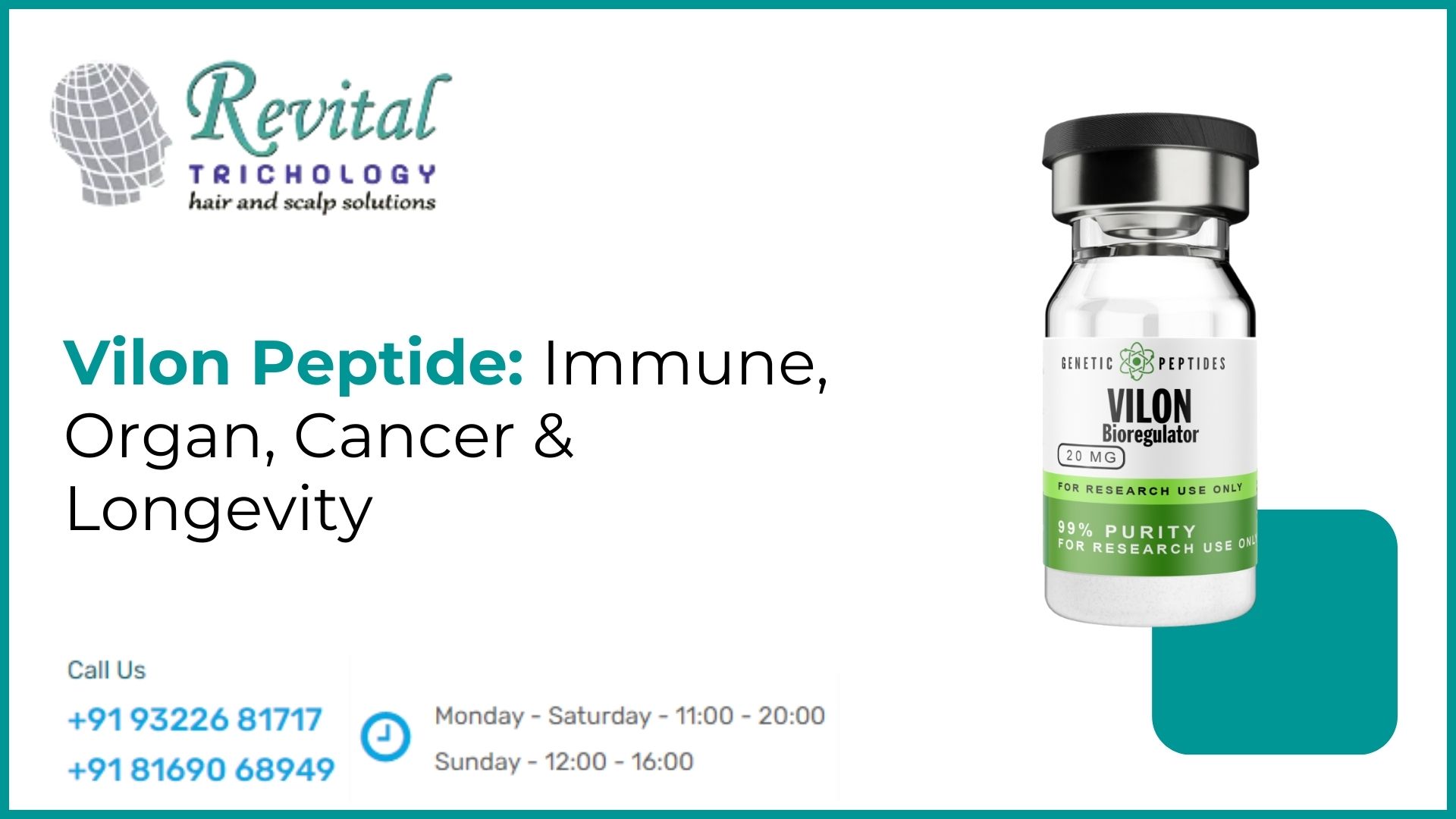
Vilon Peptide Research: Immune Regulation, Organ Protection, Cancer Defense and Longevity Enhancement
Vilon is a short synthetic bioregulatory peptide composed of two amino acids, lysine and glutamic acid. Despite its minimal molecular size, Vilon has been widely explored in biological and aging research for its ability to regulate gene expression, immune balance, and cellular repair mechanisms.
Unlike conventional therapeutic agents that target single pathways, Vilon works at a foundational biological level by helping cells restore normal function when disrupted by aging, inflammation, metabolic stress, or immune dysregulation.
Cellular and Epigenetic Mechanisms of Vilon Peptide
Chromatin Regulation and Gene Reactivation
Aging and chronic inflammation lead to chromatin condensation, which silences protective and repair genes. Vilon has demonstrated the ability to modulate chromatin structure, allowing genes involved in cellular repair, metabolism, and immune regulation to become active again.
This gene-level regulation is one of the reasons Vilon is classified as a bioregulatory peptide rather than a stimulant or hormone.
Immune System Optimization and Inflammation Control
Vilon plays a significant role in immune homeostasis. Research indicates that it can:
- Support thymus activity and immune cell maturation
- Improve T cell responsiveness.
- Prevent immune exhaustion seen with aging
- Reduce chronic low-grade inflammation.
Rather than overstimulating immunity, Vilon helps normalize immune signaling, which is critical for long-term disease prevention.
Vilon Peptide and Cancer Prevention Pathways
One of the most compelling areas of Vilon research is its anti-tumor and cancer preventive potential, particularly in aging models.
Preclinical studies suggest that Vilon may contribute to cancer prevention through:
- Restoration of normal gene expression involved in cell cycle control
- Improved immune surveillance against abnormal cells
- Reduction of chronic inflammation, a known driver of cancer
- Normalization of apoptosis pathways, allowing damaged cells to self-eliminate
Animal studies have shown lower spontaneous tumor incidence and delayed tumor development in subjects receiving Vilon. While this does not equate to cancer treatment, it highlights Vilon’s potential role in cancer risk reduction and cellular protection.
Gut Health and Intestinal Barrier Support
The gut is central to immune regulation, metabolic control, and systemic inflammation. Aging and stress compromise gut integrity, leading to increased permeability and immune activation.
Vilon has demonstrated the ability to:
- Support the regeneration of intestinal epithelial cells
- Improve enzymatic activity within gut tissues
- Strengthen gut barrier function
- Reduce inflammation driven by gut immune imbalance
By improving gut integrity, Vilon indirectly supports immune resilience, metabolic stability, and reduced systemic inflammation.
Metabolic Enhancement and Cellular Energy Regulation
Metabolic dysfunction is a hallmark of aging and chronic disease. Research suggests that Vilon can enhance metabolic efficiency by:
- Improving mitochondrial enzyme activity
- Supporting glucose and lipid metabolism at the cellular level
- Reducing inflammation-driven insulin resistance
- Enhancing tissue responsiveness to metabolic signals
These effects position Vilon as a peptide of interest in metabolic optimization and healthy aging strategies, rather than short-term fat loss or stimulant-based approaches.
Kidney Protection and Renal Cellular Support
Kidneys are highly vulnerable to oxidative stress and immune-mediated damage. Vilon has shown promise in supporting renal health by:
- Reducing inflammatory signaling within kidney tissues
- Enhancing cellular repair processes
- Supporting filtration-related enzymatic pathways
- Improving tissue resilience under stress conditions
These effects are particularly relevant in age-related kidney decline and chronic inflammatory states.
Cardiovascular and Heart Health Benefits
Vilon supports cardiovascular health through systemic rather than symptomatic mechanisms:
- Lowering inflammation linked to vascular damage
- Supporting endothelial cell stability
- Improving immune-mediated vascular repair
- Enhancing cellular regeneration in cardiac tissues
By addressing inflammation and cellular aging, Vilon aligns with preventive cardiovascular health models.
Longevity and Anti-Aging Effects
Vilon is extensively studied within longevity science due to its impact on:
- Delayed biological aging markers
- Improved stress resistance
- Enhanced tissue regeneration
- Reduced degenerative changes across organs
Animal studies have demonstrated increased lifespan, improved health span, and lower age-related pathology. These effects are believed to stem from Vilon’s ability to restore youthful gene expression patterns and immune balance.
Peptide Stacking and Synergistic Research Protocols
Vilon is frequently explored as part of peptide stacks to amplify biological outcomes.
Common Research Combinations
- Vilon and Epitalon – For longevity, telomere-related research, and cellular rejuvenation
- Vilon and Thymosin Alpha 1 – For immune optimization and inflammation control
- Vilon and Pinealon – For neuroimmune balance and stress modulation
- Vilon and BPC 157 – For systemic tissue repair and inflammation reduction
Stacking is based on complementary mechanisms and remains experimental, requiring professional oversight.
Safety Profile and Research Status
Vilon has demonstrated good tolerability in preclinical research with no significant toxicity. However:
- Human clinical trials are limited
- It is not approved as a disease treatment
- Use remains investigational
Key Takeaways
- Vilon is a bioregulatory peptide influencing gene expression and immune balance
- It supports cancer prevention pathways, gut health, and metabolic efficiency
- It shows promise for kidney protection, heart healt,h and inflammation control
- It is widely studied in longevity and anti-aging research
Final Perspective
Vilon represents a shift from symptom-driven therapies to biological restoration at the cellular level. By supporting immune surveillance, reducing inflammation, improving metabolism, and protecting organs, Vilon stands out as a foundational peptide in preventive and longevity-focused research.
As scientific exploration continues, Vilon may become central to strategies aimed at extending health span, reducing disease ris,k and maintaining cellular resilience across the lifespan.