


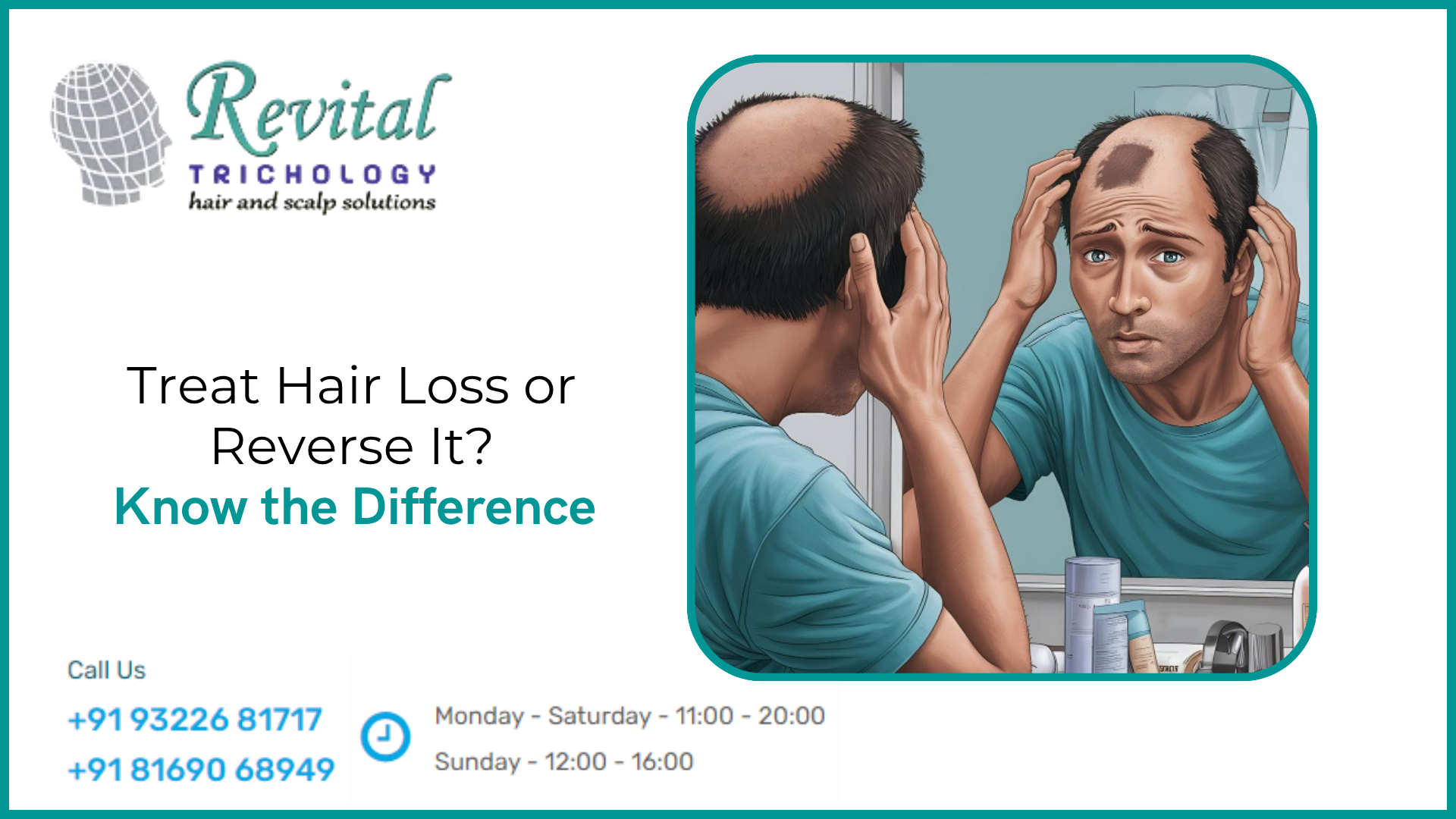
Most people searching for a hair loss treatment are looking for one thing.
They want their hair back.
Not healthier-looking hair.
Not temporary improvement.
Not a reduction in shedding for a few months.
They want to know whether the thinning can be stopped and, ideally, reversed.
The problem is that the phrase “hair loss treatment” covers a huge range of approaches. Some treatments are designed to manage symptoms. Others aim to slow progression. A few focus on improving follicular function. Some simply create the appearance of fuller hair without changing what is happening biologically.
This is where confusion begins.
Many people assume that if a treatment exists, it must be capable of reversing hair loss. In reality, treating hair loss and reversing it are not necessarily the same thing.
Understanding the difference can help set realistic expectations and prevent years of frustration spent chasing solutions that were never designed to achieve the outcome being sought.
The first mistake is treating all hair loss as the same condition
Imagine walking into a clinic and saying you have a fever.
A doctor would immediately ask why.
A fever is not a diagnosis.
It is a symptom.
Hair loss works much the same way.
Excessive shedding, thinning, widening part lines, receding hairlines, and reduced density can all look similar from a distance. Yet the underlying causes may be completely different.
Hair loss may be linked to:
- Genetics
- Hormonal changes
- Thyroid disorders
- PCOS
- Nutritional deficiencies
- Chronic illness
- Autoimmune conditions
- Stress
- Inflammation
- Certain medications
This is why two people with apparently similar hair loss can respond very differently to the same treatment.
The follicle is reacting to a cause. Unless that cause is understood, treatment often becomes guesswork.
Why many hair loss treatments fail to deliver lasting results
One reason people become sceptical about the hair restoration industry is because they have often tried several treatments before seeking specialist help.
They may have:
- Changed shampoos
- Taken supplements
- Used topical products
- Followed online advice
- Tried over-the-counter remedies
Sometimes these approaches help temporarily.
Sometimes they do very little.
The issue is not always the treatment itself.
The issue is that many interventions are aimed at the symptom rather than the process driving the symptom.
A scalp serum may improve hair quality.
A supplement may correct a deficiency.
A treatment may reduce shedding.
None of those automatically mean the underlying problem has been resolved.
Stabilisation and reversal are not the same thing
This distinction rarely receives enough attention.
Many patients assume that if hair fall decreases, their hair loss has been reversed.
That is not always the case.
Reducing active shedding is often the first objective.
Think of it as stopping a leak before repairing the damage.
Once excessive shedding is controlled, attention can shift towards improving follicular function and encouraging healthier growth.
In some situations, stabilisation itself is a successful outcome.
Particularly when dealing with progressive conditions such as androgenetic alopecia.
Preventing further deterioration can preserve a significant amount of existing hair.
Reversal, however, involves something more.
It implies meaningful recovery of follicular performance and visible improvement in density or quality.
That is a much higher target.
The condition of the follicle matters more than people realise
One of the most important factors influencing outcome is whether the follicle remains viable.
Hair follicles do not disappear overnight.
In many forms of hair loss, they gradually become weaker over time.
The process can take years.
Follicles often become:
- Smaller
- Less productive
- More fragile
- Less capable of producing thick terminal hairs
At earlier stages, there is often more opportunity to improve follicular performance.
At advanced stages, the situation becomes more difficult.
This is one reason early intervention matters.
Not because hair loss becomes impossible to address later, but because treatment options tend to be broader when follicles remain active.
Why “reversing hair loss” means different things for different people
Patients often use the same phrase while imagining very different outcomes.
For one person, reversing hair loss means restoring a fuller hairline.
For another, it means reducing visible scalp exposure.
For someone else, it simply means returning to the density they had two years ago.
These distinctions matter because success should be measured against realistic biological expectations.
A person experiencing temporary stress-related shedding may recover a substantial amount of lost density.
Someone with long-standing genetic hair loss may have different possibilities.
The goal is not to lower expectations.
The goal is to align expectations with the type of hair loss being treated.
The role of diagnosis is often underestimated
People understandably focus on treatments.
Clinicians focus on diagnosis.
That difference explains a lot.
Patients usually arrive wanting to know:
“What should I do?”
Practitioners first want to know:
“Why is this happening?”
The answer influences everything that follows.
Consider three different scenarios:
A woman experiencing postpartum shedding.
A man with androgenetic alopecia.
A patient with iron deficiency and thyroid dysfunction.
All three may present with noticeable hair loss.
Yet they require completely different treatment pathways.
Without diagnosis, even effective treatments may be applied incorrectly.
Why some people regain hair while others only maintain it
This is one of the most common questions in hair restoration.
The answer is rarely simple.
Hair growth depends on multiple factors operating together.
These include:
- Follicular health
- Genetics
- Hormonal environment
- Blood supply
- Inflammatory activity
- Nutritional status
- Treatment timing
A younger patient with recently developed thinning may respond differently from someone whose follicles have been under stress for many years.
That does not mean one situation is hopeless and the other is straightforward.
It simply means biological potential varies.
Understanding that potential is an important part of creating realistic treatment plans.
Modern hair restoration is moving beyond symptom management
A noticeable shift has occurred over the past decade.
Historically, many interventions focused primarily on managing visible hair loss.
Today, there is greater interest in understanding the biological environment surrounding the follicle.
Questions practitioners increasingly ask include:
- Is inflammation present?
- Are nutritional deficiencies contributing?
- Are hormones influencing follicular behaviour?
- Is scalp health affecting growth?
- Are regenerative therapies appropriate?
This broader approach recognises that healthy hair growth depends on more than the strand itself.
The follicle exists within a larger ecosystem.
Supporting that ecosystem often produces better outcomes than focusing solely on the symptom.
The real goal is healthier follicles, not quick fixes
People are naturally drawn to promises of rapid regrowth.
Unfortunately, hair biology operates on its own timetable.
Hair grows slowly.
Follicles respond gradually.
Meaningful improvements typically require patience.
This is one reason unrealistic marketing claims create disappointment.
The most successful outcomes usually come from consistent, evidence-based treatment strategies rather than dramatic short-term interventions.
Hair restoration is often less about finding a miracle solution and more about creating the right conditions for follicles to function at their best.
Looking at hair loss differently
Perhaps the biggest shift people can make is changing how they think about hair loss.
Instead of asking:
“Which hair loss treatment is the strongest?”
A more useful question might be:
“What is preventing my hair from growing normally?”
The second question opens the door to investigation.
The first often leads directly to treatment selection before the cause has been understood.
One approach focuses on solutions.
The other focuses on understanding.
Long-term success usually requires both.
Conclusion
The difference between treating hair loss and actually reversing it lies in understanding what the treatment is trying to achieve. Some interventions reduce shedding. Some slow progression. Some support follicular health. In the right circumstances, certain treatments may contribute to meaningful improvements in density and hair quality. However, true progress starts with identifying why the hair loss is occurring rather than assuming all thinning follows the same pattern. The most effective hair loss treatment is rarely the one that sounds most impressive. It is the one that addresses the underlying biological factors affecting the follicle.
At Revital Trichology & Wellness, we believe that successful hair restoration begins with diagnosis. Our team evaluates scalp health, medical history, nutritional factors, hormonal influences, lifestyle patterns, and follicular activity before recommending treatment. By understanding what is driving the hair loss, we can develop personalised strategies aimed not only at managing symptoms but also at supporting healthier long-term hair growth.
Frequently Asked Questions
Can all types of hair loss be reversed?
No. Some forms of hair loss respond well to treatment, while others can only be stabilised or managed. The outcome depends on factors such as the underlying cause, follicular condition, and how early treatment begins.
What is the difference between reducing hair fall and reversing hair loss?
Reducing hair fall focuses on controlling active shedding. Reversing hair loss generally refers to improving follicular performance and achieving visible improvements in hair density or quality.
Why do some hair loss treatments stop working over time?
In some cases, the underlying condition continues to progress despite treatment. In others, treatment may need adjustment as the biological factors influencing hair growth change over time.
How important is diagnosis before starting a hair loss treatment?
Diagnosis is one of the most important steps. Without understanding the cause of hair loss, it becomes difficult to select the most appropriate treatment approach.
Can hair follicles recover after years of thinning?
Some follicles retain the ability to improve even after prolonged thinning. However, outcomes depend on the degree of follicular miniaturisation and the specific type of hair loss involved.
Is hair loss always caused by genetics?
No. Genetics is a major factor in many cases, but nutritional deficiencies, hormonal disorders, stress, illness, autoimmune conditions, and scalp inflammation can also contribute.
When should someone seek professional advice for hair loss?
If shedding persists for several months, density continues to decrease, or visible scalp exposure increases, a professional assessment can help identify the underlying cause and potential treatment options.