


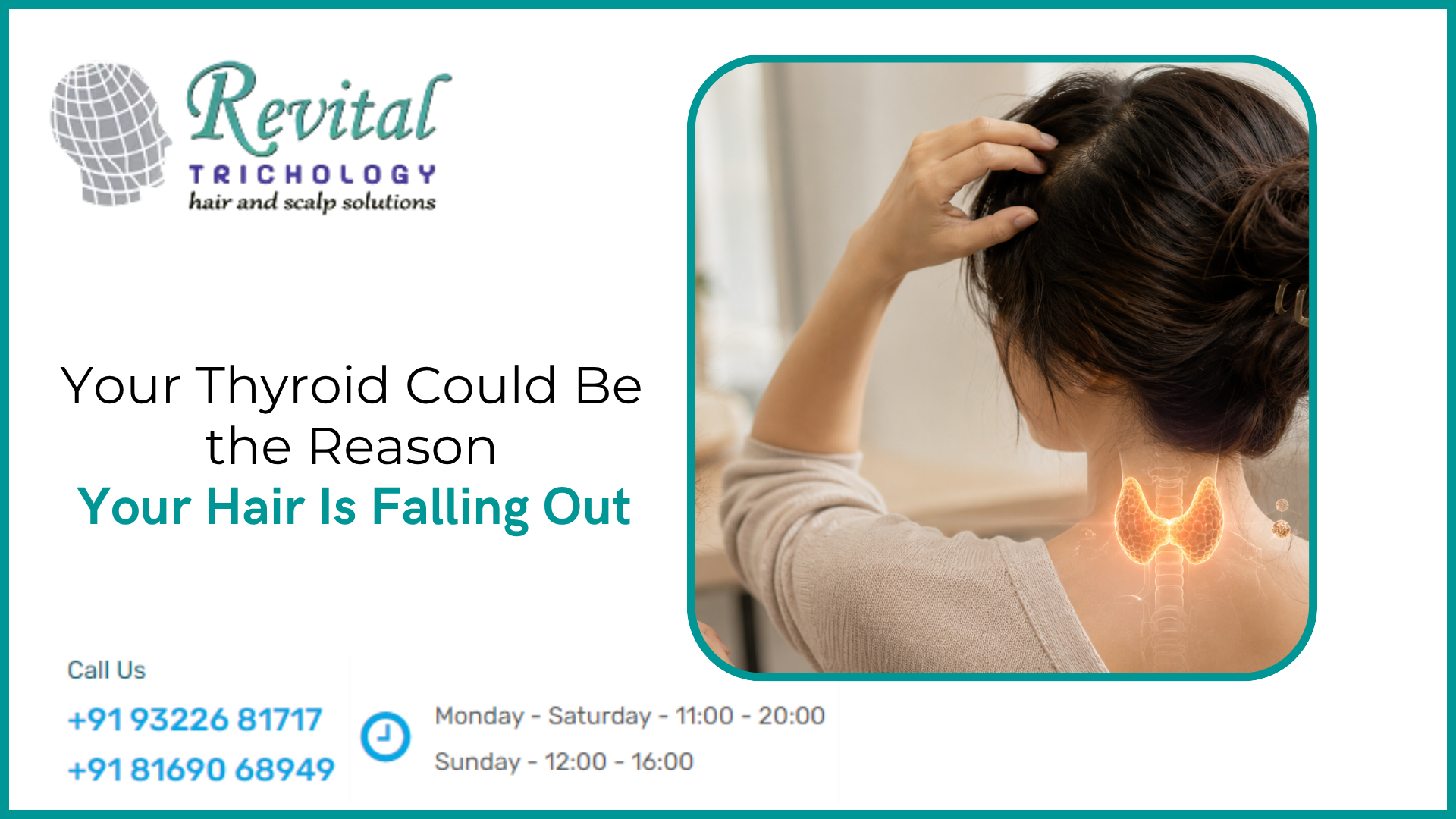
Hair loss has a way of sending people down the wrong path.
The first instinct is usually to blame the scalp.
Maybe it’s the shampoo.
Maybe it’s stress.
Maybe it’s genetics.
So people buy hair serums, switch products, start supplements, and spend months trying to solve what appears to be a hair problem.
Yet for many individuals, the issue isn’t starting at the scalp at all.
It’s starting in the thyroid.
What’s surprising is how often thyroid-related hair loss goes unrecognised, especially during the early stages. Some people experience months or even years of excessive shedding before anyone considers whether the thyroid may be involved. Others are told their test results are “normal” despite continuing to struggle with fatigue, weight changes, dry skin, brain fog, and thinning hair.
This is one reason growing numbers of people are exploring a more comprehensive approach to thyroid health, including lifestyle, nutritional, and natural thyroid treatment strategies that focus on supporting the body rather than simply reacting to symptoms.
Hair follicles are extremely sensitive to thyroid function
The thyroid gland is small.
Its influence is not.
Located at the base of the neck, the thyroid produces hormones that help regulate metabolism, energy production, temperature control, tissue repair, and cellular activity throughout the body.
Hair follicles depend on these processes more than many people realise.
A healthy follicle is constantly working.
Cells divide rapidly. New hair fibres are produced. Growth cycles are maintained. Old hairs are shed and replaced.
When thyroid function becomes disrupted, those processes often slow down.
Hair follicles notice.
Sometimes before the patient does.
Why thyroid-related hair loss often looks different
Not all hair loss presents the same way.
Genetic hair loss usually follows recognisable patterns.
A receding hairline.
A thinning crown.
A widening part.
Thyroid-related hair loss is often less predictable.
Many people describe it as:
- Hair falling out from all over the scalp
- Increased shedding during washing
- Reduced ponytail thickness
- Hair becoming finer over time
- Eyebrow thinning, particularly towards the outer edges
- Hair feeling dry and lifeless
Because the changes can be diffuse rather than localised, people often struggle to identify what is happening.
They know something has changed.
They just cannot pinpoint why.
The symptom most people ignore
Hair loss rarely arrives alone when the thyroid is involved.
The problem is that many people become so focused on their hair that they overlook the other clues.
Questions worth asking include:
- Are you constantly tired?
- Have you gained weight despite eating similarly?
- Do you feel unusually cold?
- Is your skin becoming drier?
- Has your concentration worsened?
- Do you feel less energetic than you did a year ago?
Individually, these symptoms can be explained away.
Together, they often tell a different story.
Hair loss may simply be the symptom that finally gets your attention.
Why thyroid problems are sometimes missed
Many patients assume that if they have had thyroid blood tests, the issue has been ruled out.
Unfortunately, the situation is not always that straightforward.
A patient may continue experiencing symptoms despite being told that results fall within the laboratory reference range.
This creates frustration.
The symptoms are real.
The hair shedding is real.
Yet no clear explanation is provided.
The challenge is that thyroid health is influenced by more than a single number on a laboratory report.
Practitioners increasingly recognise the importance of looking at the broader clinical picture.
Symptoms matter.
Medical history matters.
Lifestyle factors matter.
Nutritional status matters.
A laboratory value should always be interpreted within the context of the person experiencing it.
Why women are particularly vulnerable
Although thyroid disorders can affect anyone, women are affected disproportionately.
Hormonal transitions often create periods of increased vulnerability.
These include:
- Pregnancy
- Postpartum recovery
- Perimenopause
- Menopause
During these phases, thyroid dysfunction may become more noticeable or may worsen existing symptoms.
Many women initially assume the changes are simply part of ageing.
Months later, they are still dealing with persistent fatigue, unexplained weight gain, and ongoing hair shedding.
This is one reason thyroid health deserves attention whenever these symptoms occur together.
The connection between thyroid health and metabolism
One reason thyroid dysfunction affects so many systems is that thyroid hormones influence metabolic activity throughout the body.
When thyroid function slows, cells may produce and use energy less efficiently.
The consequences often extend beyond energy levels.
People may notice:
- Slower recovery
- Reduced exercise tolerance
- Weight gain
- Increased fatigue
- Hair thinning
- Changes in skin quality
The body begins operating differently.
Not dramatically.
Gradually.
Which is why many people struggle to identify when the changes first started.
Why hair often takes longer to recover
One of the most difficult aspects of thyroid-related hair loss is timing.
People naturally want immediate improvement.
Hair biology rarely cooperates.
Even after thyroid function improves, hair follicles need time to respond.
The growth cycle itself is slow.
New hairs require months to emerge and mature.
This delay often leads people to believe treatment is not working when, in reality, the follicles are still recovering.
Patience becomes an important part of the process.
Not because progress is impossible.
Because hair growth follows its own timeline.
The growing interest in natural thyroid support
The keyword natural thyroid treatment has gained popularity because many people want to understand what they can do beyond medication alone.
It is important to approach this topic realistically.
Natural approaches should not be viewed as replacements for appropriate medical care when treatment is required.
However, thyroid function can be influenced by a range of factors that deserve attention.
These may include:
Nutritional health
The thyroid depends on several nutrients for normal function.
Examples include:
- Selenium
- Zinc
- Iron
- Iodine
- Vitamin D
Deficiencies may affect how efficiently thyroid-related processes operate.
Stress management
Chronic stress influences hormonal signalling throughout the body.
Over time, prolonged stress may contribute to symptoms that overlap with thyroid-related concerns.
Sleep quality
The relationship between sleep and hormone regulation is often underestimated.
Poor sleep can affect recovery, energy levels, metabolism, and overall wellbeing.
Inflammation and autoimmune activity
Some thyroid conditions involve autoimmune processes.
In these situations, understanding broader health influences becomes particularly important.
This is one reason discussions around natural thyroid treatment increasingly focus on supporting overall health rather than searching for a single supplement or quick fix.
The biggest mistake people make
Many patients focus entirely on stopping the hair loss.
That makes sense.
The symptom is visible.
But hair is often the final messenger.
The real issue may have been developing quietly for months or years.
A slowing thyroid does not simply affect hair.
It affects the systems that support healthy hair growth.
When those systems improve, the follicle is often in a much better position to recover.
Looking beyond the scalp
Hair loss is one of the body’s most visible warning signs.
The challenge is that people often treat it as an isolated cosmetic concern.
Sometimes it is.
Sometimes it is not.
When hair loss appears alongside fatigue, weight gain, poor concentration, low energy, and changes in overall wellbeing, it becomes important to ask a bigger question.
What is the body trying to communicate?
In some cases, the thyroid may be part of that answer.
Conclusion
Hair loss can be frustrating, particularly when it seems to appear without explanation. While many people focus on scalp treatments and hair products, thyroid dysfunction is an often-overlooked factor that can influence hair growth, shedding patterns, energy levels, metabolism, and overall wellbeing. The growing interest in natural thyroid treatment reflects a desire to understand and support the broader factors that influence thyroid health rather than focusing solely on symptoms.
At Revital Trichology & Wellness, we recognise that healthy hair depends on much more than the scalp alone. Our team evaluates nutritional status, hormonal health, lifestyle factors, metabolic function, and underlying medical concerns that may be contributing to hair thinning. By identifying what is happening beneath the surface, it becomes possible to create a more personalised and effective approach to hair restoration.
Frequently Asked Questions
Can thyroid problems really cause hair loss?
Yes. Thyroid hormones play an important role in regulating hair follicle activity. When thyroid function becomes disrupted, excessive shedding, thinning, and changes in hair quality may occur.
What does thyroid-related hair loss usually look like?
Unlike some forms of genetic hair loss, thyroid-related shedding is often diffuse. People frequently notice overall thinning, increased hair fall, and reduced density across the scalp rather than a single thinning area.
Can hair grow back after thyroid-related hair loss?
In many cases, yes. If thyroid dysfunction is identified and managed appropriately, hair follicles may gradually recover. However, visible improvement usually takes time because hair growth occurs slowly.
Why do some people continue experiencing symptoms despite normal thyroid tests?
Laboratory results are only one part of the assessment. Symptoms, medical history, nutritional factors, and overall health also contribute to understanding thyroid-related concerns.
What does natural thyroid treatment mean?
Natural thyroid treatment generally refers to lifestyle and health-support strategies such as nutrition, stress management, sleep optimisation, and addressing factors that may influence thyroid function alongside appropriate medical care.
Can nutritional deficiencies affect both thyroid health and hair growth?
Yes. Nutrients such as iron, selenium, zinc, and vitamin D play important roles in both thyroid-related processes and healthy hair growth.
When should someone investigate their thyroid as a possible cause of hair loss?
If hair shedding occurs alongside fatigue, unexplained weight gain, low energy, dry skin, feeling cold frequently, or difficulty concentrating, discussing thyroid evaluation with a healthcare professional may be worthwhile.