


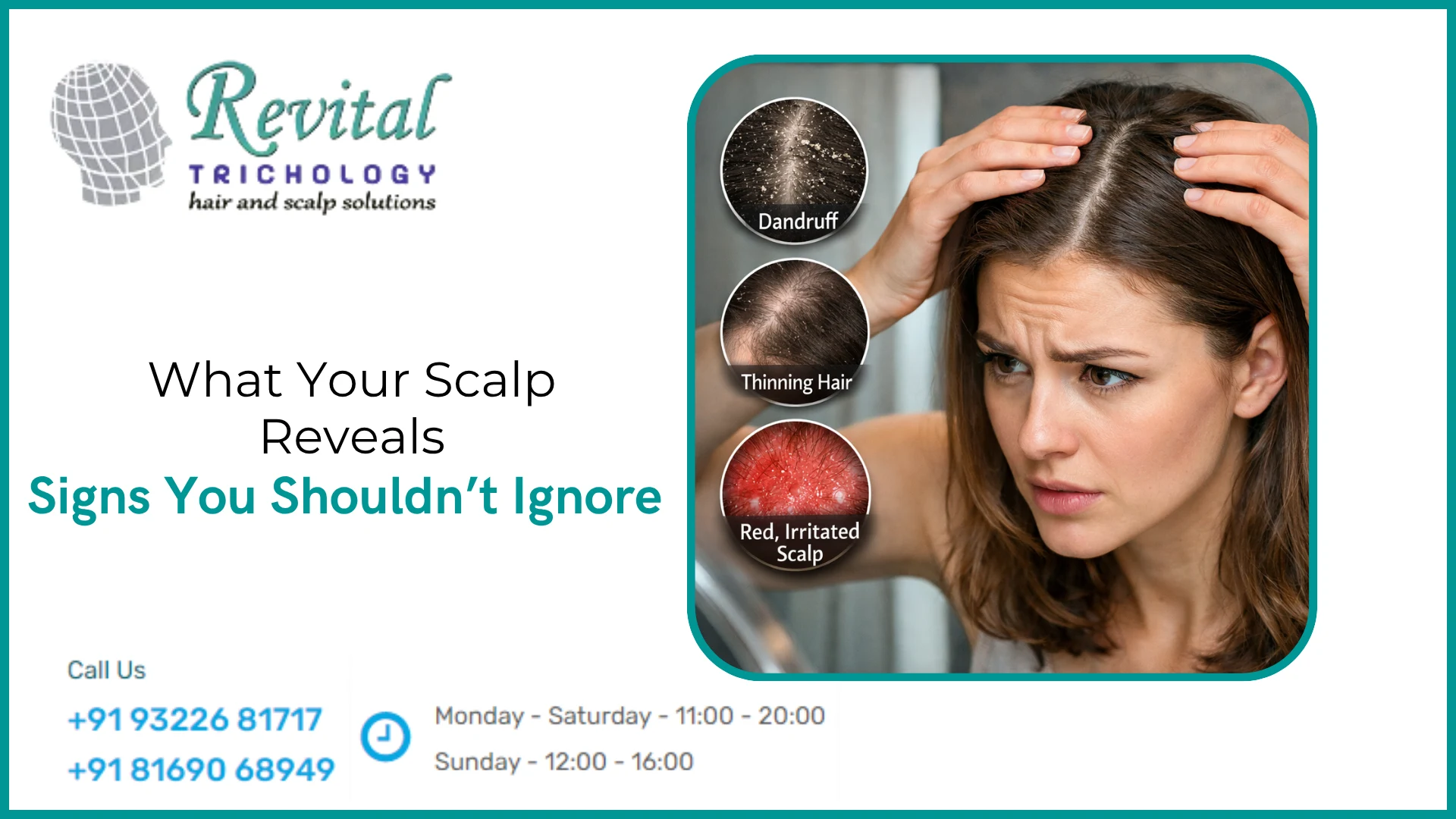
What Your Scalp Says About Your Health: Hidden Signs You Shouldn’t Ignore
If you have been dealing with ongoing hair scalp problems, you have probably tried to fix them as they appear. A different shampoo. Maybe oiling more or less. Paying extra attention for a few days. It feels like the right response.
But when the same issues return, itching that does not quite settle, flakes that disappear and come back, or hair shedding that feels slightly more than usual, it starts to feel less random.
That is usually the point where the question changes. Not just how to manage it, but what it might be indicating.
Because the scalp, in most cases, is not reacting without reason.
The Scalp Reflects More Than Just Hair Care
It is easy to think of the scalp as something separate. You wash it, treat it, and expect it to behave.
But biologically, it is not isolated. It is closely connected to what is happening inside the body.
Each follicle depends on:
- Blood flow carrying nutrients
- Hormonal signals that influence growth cycles
- Oil glands that regulate the scalp environment
- The immune system, which affects inflammation
So when something shifts internally, even slightly, the scalp often reflects it. Not always immediately. But over time, patterns begin to show.
Itching That Stays Longer Than It Should
An occasional itch is normal. Weather changes, sweat, or even a new product can cause that.
But when the itching lingers, even after washing your hair or adjusting your routine, it usually points to something more stable.
It may not be obvious at first. The scalp looks mostly normal. Maybe slightly irritated. Nothing extreme.
Still, the discomfort remains.
That kind of persistent itching can be linked to:
- A mild but ongoing inflammatory response
- Imbalance in the scalp’s natural microbial environment
- Sensitivity that has developed over time rather than instantly
- Even stress, which tends to show up in subtle ways on the skin
It is not always dramatic. That is what makes it easy to ignore.
Flaking That Follows a Pattern
Flakes are often treated as a temporary issue. Something that can be washed away or managed with a product.
And sometimes, that works.
But when flaking keeps returning, especially in cycles, it suggests that the scalp is not resetting fully.
You may notice:
- The flakes reduce after washing
- The scalp feels better for a few days
- Then gradually, the same pattern returns
That repetition is important. It indicates that the surface is being managed, but the underlying balance is still off.
This is one of the more common hair scalp problems, and also one of the most misunderstood.
Hair Shedding That Feels Slightly Off
Hair fall is expected to some extent. It is part of the natural cycle.
But there are moments when it feels different. Not excessive, but noticeable enough to question.
More strands on the pillow. More during washing. A subtle thinning in certain areas.
This type of shedding often reflects something internal:
- Nutritional gaps, especially iron or protein
- Stress that has built up over time
- Changes in hormonal balance
- Recovery from illness or fatigue
The scalp itself may look normal in these cases. That is what makes it confusing.
The change is happening beneath the surface.
Changes in Oiliness or Dryness
Most people are familiar with their scalp’s usual behavior. Some are more oily, some more dry.
But when that pattern shifts without a clear reason, it is worth noticing.
- A scalp that suddenly feels greasy much faster than before
- Or one that feels unusually dry and tight despite regular care
These changes are not always caused by products. They can reflect:
- Hormonal fluctuations
- Changes in the scalp barrier
- Environmental or lifestyle shifts
It is not the condition itself that matters as much as the change.
Sensitivity That Does Not Fully Settle
Sometimes the scalp starts reacting more than usual. Slight redness, discomfort when touching, or a general sense that it is not as calm as it used to be.
This kind of sensitivity often builds gradually.
It may be linked to:
- Repeated irritation from untreated dandruff
- Overuse of products, even mild ones
- Low-level inflammation that has not been addressed
It rarely appears suddenly. It develops over time, which makes it easy to overlook until it becomes persistent.
When Multiple Signs Appear Together
In many cases, these signs do not show up alone.
You might notice itching along with flakes. Or oiliness combined with sensitivity. Sometimes even hair fall alongside scalp discomfort.
When multiple hair scalp problems appear together, it usually points to a broader imbalance.
Trying to manage each one separately often leads to partial relief, but not resolution.
Why Quick Fixes Feel Temporary
It is natural to reach for solutions that give immediate relief. Cleansing treatments, anti-dandruff shampoos, or home remedies.
They can help. And sometimes, they do.
But when the same issue returns, it becomes clear that something is being missed.
The pattern usually looks like this:
- Temporary improvement
- A short period of stability
- Gradual return of the same symptoms
It is not that the treatment is ineffective. It is that it is not addressing the full picture.
What the Scalp Is Quietly Indicating
When you step back and look at these signs together, they tend to reflect three areas:
- Internal health, including nutrition and stress
- The condition of the scalp environment itself
- External care habits and routines
These factors overlap more than it seems. A shift in one often affects the others.
So the goal is not to respond to each symptom in isolation, but to understand how they connect.
A More Grounded Way to Approach It
When dealing with recurring hair scalp problems, a more measured approach tends to work better.
- Pay attention to patterns rather than isolated events
- Avoid changing products too frequently
- Support internal health alongside external care
- Give treatments enough time before judging results
- Seek evaluation when the same issue repeats consistently
It is not about doing more. It is about doing what is relevant.
Final Thoughts
The scalp rarely behaves unpredictably without a reason. It responds to changes, sometimes subtly, sometimes more clearly.
Flaking, itching, oil imbalance, or shedding are not just surface concerns. They are indicators. And when they repeat, they usually carry meaning.
From what we have seen, the shift happens when people stop reacting to symptoms individually and start looking at the pattern as a whole. That is where clarity begins to form.
We work with that perspective, helping you understand what your scalp is reflecting, so your approach becomes less trial-and-error and more aligned with what is actually needed.
FAQs
1. Can scalp issues reflect internal health?
Yes, persistent scalp changes often indicate internal imbalances.
2. Is itching always due to dryness?
No, it can also result from inflammation or microbial imbalance.
3. Why do flakes keep returning?
Because the underlying cause is not fully addressed.
4. Can stress affect scalp health?
Yes, stress can disrupt both scalp balance and hair growth cycles.
5. Does hair fall always mean scalp issues?
Not always, but scalp health can influence shedding.
6. Should I frequently change hair products?
Frequent changes can worsen scalp sensitivity.
7. When should I seek help for scalp problems?
When symptoms persist or repeat despite consistent care.