


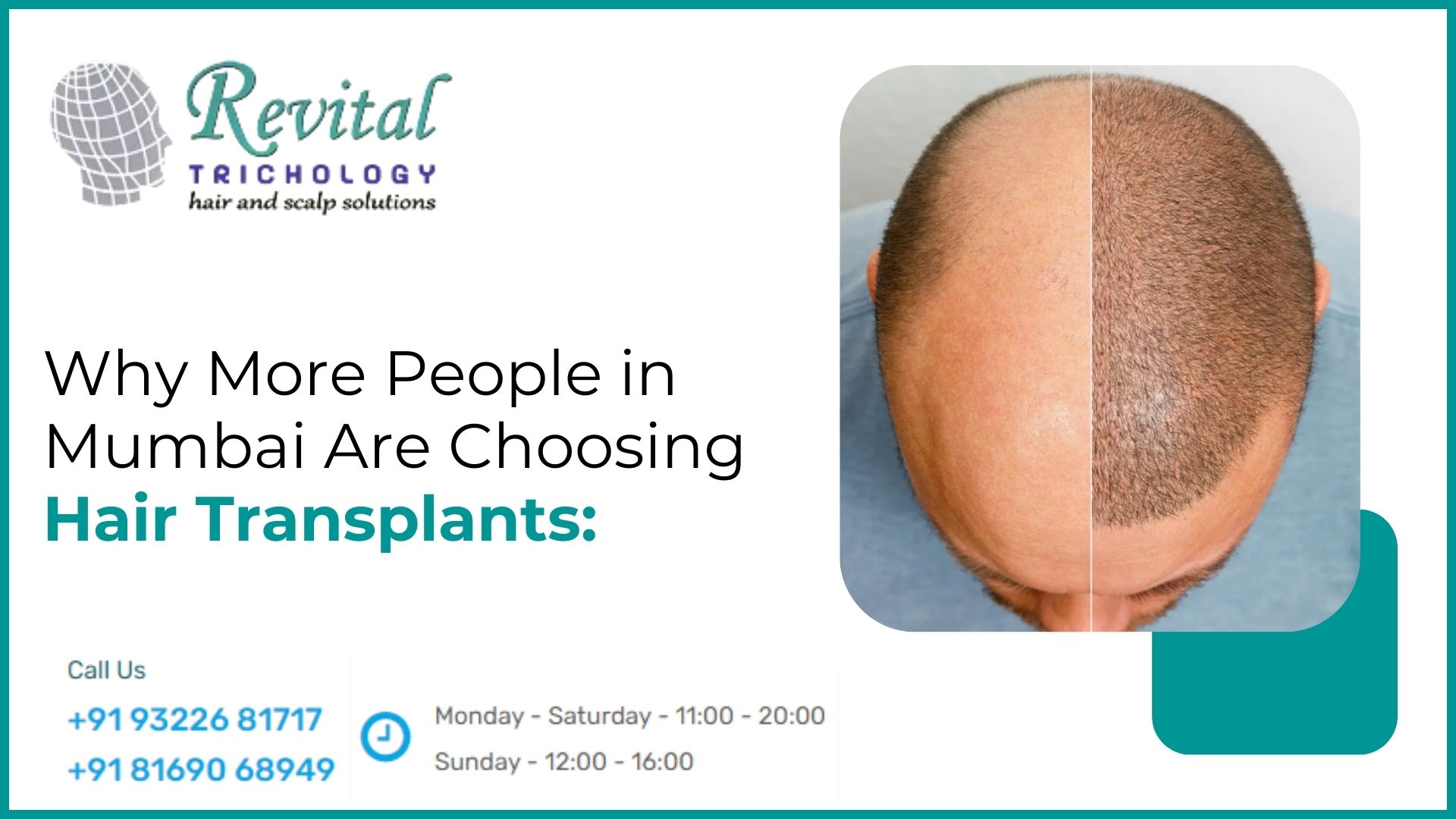
Why More People in Mumbai Are Choosing Hair Transplants: Hair Loss Causes and Solutions
Hair loss has quietly become one of the most common aesthetic and emotional challenges for both men and women in Mumbai. From hectic work schedules and pollution to genetic predispositions and hormonal fluctuations, a combination of lifestyle and biological factors is driving individuals to seek long-term, effective solutions. Among these, one treatment stands out for its reliability and natural-looking outcomes: the Hair Transplant in Mumbai.
But what is truly behind this surge in demand? Which types of hair loss are most widespread in the city, and how do modern solutions address them? This blog explores the primary causes, available treatments, technological advancements, and why hair transplants are becoming such a popular choice.
1. Understanding Why Hair Loss Is Increasing in Mumbai
While some degree of daily hair fall is normal, excessive or progressive thinning is not. Several city-specific factors are contributing to this rise.
1.1. Lifestyle-Induced Stress
Stress remains one of the most underestimated triggers of hair fall. Mumbai’s fast-paced, highly competitive environment can lead to:
- Telogen Effluvium – temporary shedding caused by physical or emotional stress
- Sleep disturbances – which disrupt hair growth cycles
- Cortisol imbalance – which weakens follicles over time
1.2. Environmental Pollution
Pollution in major metropolitan areas has been linked to:
- Build-up of particulate matter on the scalp
- Increased scalp inflammation
- Accelerated follicular damage
- Reduced oxygen supply to the scalp
These effects often lead to dull hair, breakage, and early thinning.
1.3. Nutritional Gaps
Due to busy schedules, many professionals skip meals, eat on the go, or rely heavily on processed foods. This leads to deficiencies in:
All of these are essential for follicular strength and optimal growth.
1.4. Genetics and Hormonal Disorders
A significant percentage of Mumbai’s population experiences:
- Androgenetic Alopecia (pattern baldness)
- PCOS-related thinning
- Thyroid-related hair loss
- Post-pregnancy shedding
When genetics are involved, hair loss is progressive and requires strategic, long-term management.
2. Types of Hair Loss Most Commonly Seen in Mumbai
2.1. Androgenetic Alopecia (Male & Female Pattern Hair Loss)
This hereditary condition gradually reduces hair density. It usually begins at the crown or frontal hairline in men, and causes widening part-line thinning in women. It is one of the primary reasons individuals consider a Hair Transplant in Mumbai.
2.2. Telogen Effluvium
Triggered by stress, illness, crash dieting, or hormonal shifts. The shedding is sudden but reversible with appropriate treatment.
2.3. Alopecia Areata
An autoimmune disorder in which the body mistakenly attacks its own hair follicles, causing patchy hair loss.
2.4. Scalp Infections
Conditions such as:
- Seborrhoeic dermatitis
- Psoriasis
- Fungal infections
These can cause temporary thinning if left untreated.
2.5. Traction Alopecia
Very common due to tight hairstyles such as ponytails, braids, or hair extensions.
Understanding the type of hair loss is vital not all cases require a transplant. Many respond effectively to medical or regenerative therapies.
3. Popular Non-Surgical Hair Loss Solutions
Before opting for a transplant, most individuals begin with non-invasive treatments. These are particularly effective in early to moderate stages.
3.1. Medical Therapies
- Minoxidil: Helps prolong the growth phase.
- Finasteride (for men): Reduces DHT, the hormone responsible for follicle miniaturisation.
- Low-Level Laser Therapy (LLLT): Enhances blood circulation to the follicles.
3.2. Regenerative Treatments
These advanced therapies aim to activate dormant follicles.
- PRP (Platelet-Rich Plasma): Uses the patient’s own growth factors to stimulate regeneration.
- PRF (Platelet-Rich Fibrin): A more advanced version with slower release of healing factors.
- GFC (Growth Factor Concentrate): Highly concentrated growth factors for faster response.
- Exosome Therapy: Nano-vesicles that promote cellular repair and follicle regeneration.
3.3. Mesotherapy
A blend of vitamins, peptides, and nutrients injected into the scalp to boost density and growth.
3.4. Supplements & Lifestyle Correction
Improving nutrition, sleep, stress levels, and hormonal balance can significantly influence hair health.
Non-surgical treatments are ideal for early-stage thinning or as supportive therapies before or after a transplant.
4. Why Hair Transplants Have Become So Popular in Mumbai
While other therapies slow or reverse early hair thinning, a hair transplant offers a permanent, natural solution for advanced stages.
4.1. Long-Lasting & Natural Results
Modern transplant techniques use your own hair from the back of the scalp. These hairs are genetically resistant to balding, making the results:
- Permanent
- Natural in texture and colour
- Seamless with existing hair
4.2. Advanced Techniques with Minimal Downtime
Mumbai clinics now offer:
- FUE (Follicular Unit Extraction)
- DHI (Direct Hair Implantation)
- Micro FUE
- Robotic-assisted transplantation
These deliver:
- No visible scarring
- Quick recovery
- Higher graft survival rate
- More precise hairline creation
4.3. Increased Awareness & Social Acceptance
Open discussions about hair loss are now common. Social media, celebrity influence, and medical transparency have normalised choosing a Hair Transplant in Mumbai.
4.4. High Success Rates
With experienced trichologists and state-of-the-art facilities, success rates have improved dramatically. Natural density and refined hairlines are now standard.
4.5. Cost-Effectiveness
Compared with Western countries, Mumbai offers:
- International-standard outcomes
- Certified trichologists
- Advanced technology
- Competitive pricing
This has made the city a major centre for medical tourism in hair restoration.
5. Who Is an Ideal Candidate for a Hair Transplant?
You may be a suitable candidate if you have:
5.1. Stable or Predictable Hair Loss
Such as:
- Male pattern baldness
- Receding hairline
- Crown thinning
5.2. Sufficient Donor Area
Adequate density at the back of the scalp is crucial.
5.3. No Active Scalp Disorders
Conditions like psoriasis or infections should be treated first.
5.4. Realistic Expectations
A transplant improves density; it cannot replicate teenage-level thickness.
5.5. Limited Results from Other Therapies
Most people turn to a Hair Transplant in Mumbai once medical therapies plateau.
6. The Hair Transplant Procedure: Step-by-Step
6.1. Consultation & Diagnosis
- Scalp examination
- Medical history
- Hair density evaluation
- Pattern analysis
- Personalised treatment plan
6.2. Hairline Design
One of the most important steps, based on:
- Facial proportions
- Age
- Ethnicity
- Growth angle
- Future hair loss
6.3. Graft Extraction
Using micro-punch tools (in FUE) to extract follicular units.
6.4. Graft Sorting & Preservation
Ensures graft vitality and survival.
6.5. Implantation
Grafts are placed with precise angulation and density for a realistic appearance.
6.6. Recovery & Aftercare
Most patients resume daily activities within a few days.
7. Expected Results and Timeline
Month-by-Month Overview
- Month 1–2: Initial shedding (normal)
- Month 3–4: Early growth
- Month 6–8: Noticeable thickening
- Month 10–12: Full results
- Month 12–18: Final maturation
A successful transplant blends seamlessly with your natural hair.
8. Why Choosing the Right Clinic Matters
The success of your transplant depends on:
- The expertise of the trichologist
- Sterility standards
- The technique used
- Graft handling
- Artistic hairline planning
- Post-procedure care
A reputable clinic will always assess root causes and only recommend transplantation when necessary.
Final Thoughts
At Revital Trichology, we understand that hair loss is more than a cosmetic concern it affects confidence, identity, and emotional wellbeing. With over 25 years of experience in trichology, regenerative medicine, and functional diagnostics, we take a holistic and evidence-based approach to every case.
We offer advanced hair restoration solutions, including minimally invasive transplant techniques, performed with precision, ethics, and personalised care. Before recommending any treatment, we thoroughly investigate the root cause to ensure long-lasting, natural results.
If you’re considering a hair restoration journey or wish to understand your type of hair loss better, we are here to guide you with transparency and expertise.
FAQs
1. Is a hair transplant permanent?
Yes. Hair taken from the back of the scalp is genetically resistant to balding, making results long-lasting. However, maintaining non-transplanted hair with supportive treatments is still important.
2. How soon will I see results after a hair transplant?
Most individuals observe new growth around 3–4 months post-surgery. Full results typically appear between 10–12 months, with continued improvement up to 18 months.
3. Does the procedure hurt?
Local anaesthesia keeps the procedure comfortable. You may feel mild pressure, but most people find it easily tolerable.
4. Will there be visible scars?
Modern FUE and DHI techniques leave tiny dot-sized marks which are usually unnoticeable, even with short hair. FUT leaves a linear scar, though this is typically concealed within the hair.
5. What is the expected downtime?
Most patients return to work within 2–5 days. Intense exercise and heavy sweating should be avoided for 10–14 days.
6. Am I a suitable candidate for a hair transplant?
You may be suitable if you have stable hair loss, a healthy donor area, and no active scalp conditions. A professional assessment is essential.
7. Can women undergo hair transplants?
Absolutely. Female pattern thinning, widening of the parting, and traction alopecia can all be successfully treated with hair transplantation when appropriate.