


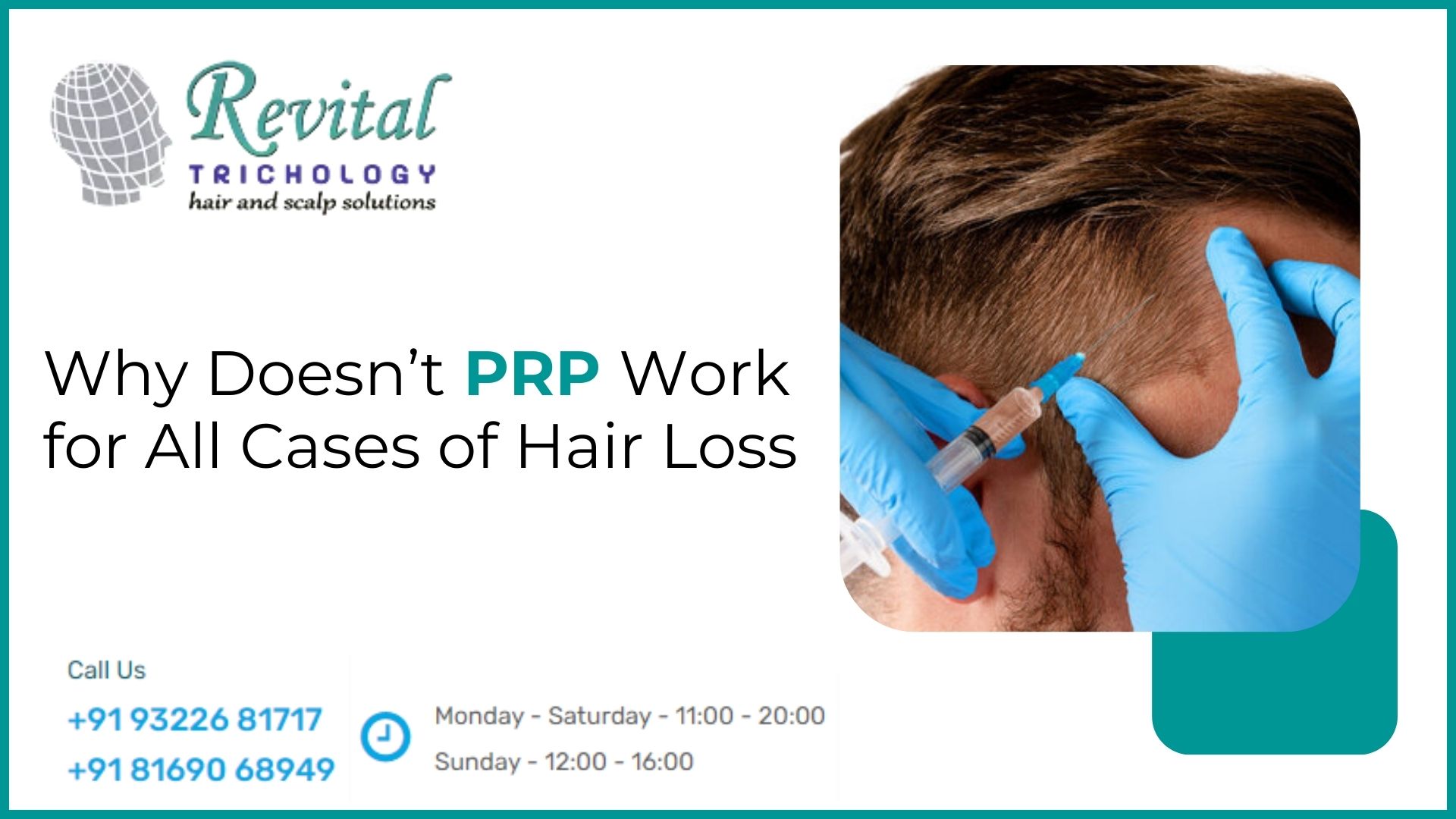
Why Doesn’t PRP Work for All Cases of Hair Loss
Platelet-rich plasma (PRP) has become one of the most widely discussed regenerative treatments for hair thinning and early-stage alopecia. With its reputation for being natural, minimally invasive, and relatively cost-effective, PRP gained popularity rapidly, especially among individuals seeking solutions before considering surgery. Across major cities, including Mumbai, many clinics highlight the promising potential of PRP Hair Treatment in Mumbai for stimulating regrowth and improving hair quality.
However, despite its appeal and its positive impact in several cases, PRP does not work for everyone. Some individuals experience excellent improvement, while others notice only mild changes, and a smaller percentage experience almost no benefit at all. This discrepancy can be confusing and frustrating, particularly for patients who invested time, hope, and resources into the treatment.
Understanding why PRP works for some but not for others requires a deeper look into biology, diagnosis accuracy, individual health status, and the limitations of the therapy itself. This article aims to clarify these factors from a trichological perspective, offering a transparent explanation for patients seeking clarity.
1. What PRP Actually Does and How It Works
To understand its limitations, we must first understand its mechanism.
PRP is derived from the patient’s own blood. After collection, the blood is placed in a centrifuge to separate the platelets from other components. These concentrated platelets are rich in:
When injected into the scalp, PRP aims to:
- Stimulate follicular activity
- Enhance blood supply
- Reduce minor inflammation
- Support tissue repair
- Prolong the active growth (anagen) phase
PRP generally works best when the follicles are still alive and capable of responding to biochemical signals. This distinction is essential.
2. The Common Misconception: “PRP Works for All Types of Hair Loss.”
One of the most widespread myths is that PRP is a universal solution for hair thinning. Unfortunately, it is not.
PRP’s effectiveness is entirely dependent on the health and availability of hair follicles. If follicles are already miniaturised to the point of near dormancy or worse, if they are dead or replaced by fibrosis, PRP cannot revive them. No regenerative therapy can.
This means PRP is helpful in some conditions but highly limited in others.
3. Conditions in Which PRP Works Well
PRP tends to perform best in cases such as:
1) Early-stage androgenetic alopecia (male or female pattern hair loss)
When treated early, follicles are still active enough to respond to growth signals.
2) Stress-induced hair shedding (telogen effluvium)
PRP can accelerate recovery by supporting scalp healing and reducing inflammation.
3) Mild thinning caused by nutritional fluctuations
This can help bring follicles back into a more stable growth cycle.
4) Postpartum hair shedding
It may quicken the restoration of density once hormonal fluctuations stabilise.
However, not all patients in these categories respond equally, and the reason varies widely.
4. Conditions Where PRP Is Less Effective or Ineffective
1) Long-standing androgenetic alopecia
If hair follicles have significantly miniaturised over the years, PRP may yield only marginal or temporary improvement.
2) Scarring alopecias
Such as lichen planopilaris (LPP) or frontal fibrosing alopecia (FFA), where follicles are destroyed and replaced by scar tissue. PRP cannot regenerate follicles in these cases.
3) Severe traction alopecia
Caused by long-term tight hairstyles. Chronic traction kills the follicle, making regrowth impossible.
4) Alopecia areata
Results vary widely. Some patients respond well due to the inflammatory nature of AA, while others experience no improvement at all.
5) Medical conditions causing hair loss
Such as thyroid imbalances, anaemia, autoimmune conditions, or hormonal disorders. PRP cannot override underlying systemic issues.
6) Hair loss due to medication
Where the root cause is drug-induced, PRP offers limited improvement.
5. Why PRP Works Beautifully for Some and Poorly for Others
The factors below play a pivotal role in determining the outcome of PRP. Understanding them helps set realistic expectations.
1. Follicular Health and Density
PRP can only activate follicles that are still biologically capable of regrowth. If the density is already too low, the improvement is naturally limited.
2. Stage of Hair Loss
Early intervention equals better results. Late-stage hair loss, especially advanced pattern baldness, rarely responds dramatically.
3. Underlying Medical Conditions
Even mild conditions can blunt PRP’s effectiveness:
- Vitamin D deficiency
- Iron deficiency
- Hormonal imbalances
- PCOS
- Autoimmune conditions
If these medical concerns are not corrected, the follicles cannot respond fully.
4. Quality of the Patient’s Blood
Not all blood is the same. PRP relies on platelet quality. Factors that affect platelet strength include:
- Age
- Smoking
- Heavy alcohol intake
- High stress
- Poor diet
- Certain medications
- Chronic illnesses
If platelet activity is low, the growth-factor concentration in the PRP is also lower.
5. Technique and Equipment Used
PRP success depends heavily on clinical expertise.
Quality of Results May Depend On:
- Type of centrifuge
- Speed and duration of spin
- Platelet concentration protocol
- Depth and precision of injection
- Use of activators (some clinics use them, others don’t)
- Number of sessions
Many clinics advertise PRP without proper methodology, leading to inconsistent or poor results.
6. Frequency of Sessions
Some patients stop too early or receive inadequate sessions. PRP usually requires:
- 4 to 6 sessions initially
- At intervals of one month
- Followed by maintenance every 6–12 months
Expecting drastic results after one or two sessions leads to disappointment.
7. Severity of Inflammation
Chronic scalp inflammation damages follicles. If this underlying factor is not addressed before PRP, the treatment underperforms.
6. PRP vs Other Regenerative Treatments
With advancements in trichology, PRP is no longer the only regenerative method available. Many clinics offer a variety of alternative or supplementary options.
Exosomes
Exosomes contain signalling molecules that enhance cellular communication. They often outperform PRP for regrowth and scalp repair.
PRF (Platelet-Rich Fibrin)
This is a newer form of PRP with a slower release of growth factors, offering more sustained results.
GFC (Growth Factor Concentrate)
More concentrated than conventional PRP and often more predictable.
Stem-cell-based therapies
These are currently considered experimental but highly promising.
Understanding how PRP compares helps patients make informed decisions.
7. When PRP Can Still Be Extremely Valuable
Despite its limitations, PRP remains beneficial when used appropriately.
1) As an Early Intervention
It can significantly delay the progression of pattern hair loss.
2) As a Supportive Therapy
PRP enhances the results of:
- Microneedling
- Low-level laser therapy
- Nutraceuticals
- Minoxidil
3) Before and After a Hair Transplant
PRP improves graft survival, strengthens donor hair, and accelerates recovery.
4) For Scalp Rejuvenation
It improves:
- Scalp circulation
- Hydration levels
- Texture
- Inflammation control
Thus, while PRP is not a cure-all, it plays an essential role when chosen correctly.
8. How to Know If You Are a Good Candidate
You may be a suitable candidate if:
- Your hair loss is recent or moderate
- Follicles are still active
- Blood tests rule out underlying disorders
- You are willing to undergo multiple sessions
- You practice supportive home care
- You follow nutritional and lifestyle recommendations
You may not be a good candidate if:
- The scalp shows shiny, smooth bald patches (indicating permanent loss)
- Hair loss is caused by scarring conditions
- You have uncontrolled medical issues
- Your platelet quality is low
9. Why Accurate Diagnosis Matters More Than the Treatment Itself
Many individuals undergo PRP without proper evaluation, leading to unsatisfactory results. A thorough trichological assessment includes:
- Medical history
- Scalp examination
- Digital trichoscopy
- Blood tests
- Hormonal evaluation
- Lifestyle assessment
- Nutritional analysis
Only after understanding the root cause can a personalised plan be created.
10. The Role of a Trichologist in PRP Success
A skilled trichologist plays a vital role in:
- Correct diagnosis
- Accurate injection technique
- Assessing follicular activity
- Recommending appropriate alternatives
- Designing a holistic plan
The goal is not simply to offer PRP, but to ensure it is used only where it will genuinely help.
Final Thoughts
At Revital Trichology, we believe in transparency, accuracy, and scientific integrity. While PRP Hair Treatment in Mumbai has helped many of our clients, we are equally honest about its limitations. Our approach is to diagnose first, treat second, and ensure that every therapy is tailored to the individual’s unique scalp biology and health status.
If PRP is right for you, we personalise the protocol to maximise your results. If it is not the right option, we guide you towards more suitable alternatives such as GFC, PRF, exosomes, or medical therapy. Our focus is not on offering a single treatment, but on providing the right solution for long-term scalp and hair health.
Frequently Asked Questions
1. Why doesn’t PRP work for everyone?
PRP depends entirely on the health of the hair follicles. If follicles are already severely miniaturised, inflamed, dormant, or replaced by scar tissue, they cannot respond to the growth factors in PRP. Underlying medical conditions, poor platelet quality, or incorrect technique can also reduce its effectiveness.
2. How do I know if I’m the right candidate for PRP?
You are likely a suitable candidate if your hair thinning is recent, mild, or moderate, and if your follicles are still active. A trichologist will usually recommend a scalp examination and blood tests before starting PRP to ensure that your body is capable of responding well to the treatment.
3. Is PRP more effective in the early stages of hair loss?
Yes. PRP is most successful when used early, before follicles have undergone irreversible miniaturisation. Early intervention helps maintain density and slow progression.
4. How many PRP sessions do most people need?
Most individuals require a course of 4–6 sessions, spaced about a month apart. Maintenance sessions every six to twelve months help sustain results. One or two sessions alone rarely produce significant improvement.
5. What conditions make PRP less effective?
PRP has limited success in long-standing baldness, scarring alopecias, advanced traction alopecia, medical-related hair loss (such as thyroid disease), and cases where inflammation or fibrosis is significant. It may also be less effective if platelet quality is low due to lifestyle or health factors.
6. Can PRP be combined with other treatments?
Absolutely. PRP works well when paired with therapies like microneedling, low-level laser therapy, minoxidil, nutraceuticals, or regenerative options such as exosomes or PRF. Combination protocols typically produce better and more stable results.
7. Will PRP work if my blood quality is poor?
Possibly not. The effectiveness of PRP relies heavily on the strength and concentration of your platelets. Factors such as smoking, chronic stress, nutrient deficiencies, and certain medications can weaken platelet activity. Improving your internal health often enhances treatment outcomes.