


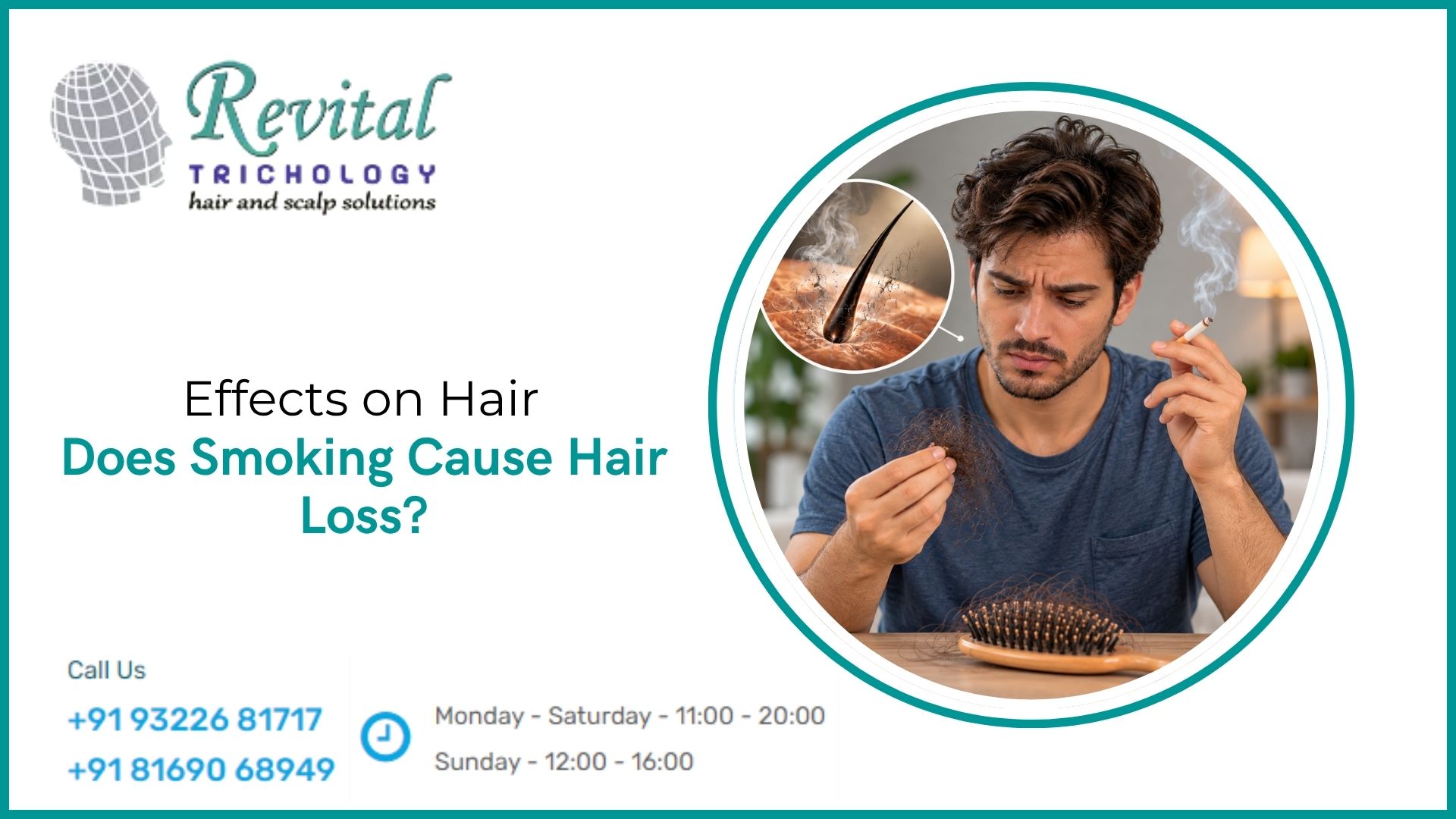
Most people know that smoking can damage the lungs and heart. But not everyone thinks about what it might be doing to their hair.
You may have noticed your hairline slowly moving backwards or more strands falling out while washing your hair. Perhaps you have been smoking for years and are now wondering whether cigarettes have something to do with it.
So, does smoking cause hair loss, or is the connection just another health myth?
Research suggests that smoking is associated with a higher risk of certain types of hair loss, particularly male pattern baldness. But smoking is rarely the only factor involved. Genetics, hormones, age, nutrition, and other health conditions can also affect hair growth.
Understanding how smoking influences your hair follicles can help you recognise the risks and make better decisions about your hair health.
How Does Smoking Affect Your Hair?
Every strand of hair grows from a small structure beneath the scalp called a hair follicle.
These follicles depend on a healthy local environment, including blood circulation, oxygen delivery, and normal cellular activity.
Cigarette smoke contains thousands of chemicals, including nicotine, carbon monoxide, and substances that can damage cells.
Research suggests that smoking may interfere with several processes involved in maintaining healthy hair follicles.
1. Nicotine Can Affect Blood Circulation
Nicotine is an addictive substance found in tobacco.
One of its effects is narrowing certain blood vessels, a process called vasoconstriction.
Healthy blood circulation helps deliver oxygen and nutrients to tissues throughout the body, including the scalp.
Researchers have proposed that smoking-related changes in small blood vessels may interfere with the environment surrounding hair follicles.
However, reduced circulation alone has not been established as the explanation for every case of smoking-related hair loss.
2. Smoking Increases Oxidative Stress
Your body naturally produces molecules called free radicals. Normally, protective systems help keep them under control.
Smoking increases exposure to substances that can contribute to oxidative stress, which occurs when harmful oxidising activity overwhelms the body’s protective mechanisms.
Over time, excessive oxidative stress can damage cells and contribute to inflammation.
Hair follicles contain rapidly dividing cells, making normal cellular function especially important for hair growth.
Researchers believe oxidative stress may be one of the ways smoking contributes to follicle damage and hair thinning.
3. Smoking May Increase Inflammation Around Hair Follicles
Inflammation is the body’s natural response to injury or harmful substances.
But when inflammation becomes persistent, it can interfere with normal tissue function.
Smoking has been linked to increased inflammatory activity throughout the body.
The American Academy of Dermatology recommends stopping smoking as part of managing hair loss because smoking-related inflammation may worsen the condition.
This doesn’t mean every smoker will develop baldness. It means smoking can introduce another risk factor into an already complicated process.
What Does Research Say About Smoking and Hair Loss?
The connection between smoking and hair loss has been studied for several years.
A 2024 meta-analysis published in the Journal of Cosmetic Dermatology examined findings from eight studies involving smoking and male pattern hair loss.
The researchers found that men who had smoked were more likely to experience androgenetic alopecia than men who had never smoked.
<box></box>
In the analysis, the odds of developing male pattern hair loss were approximately 1.82 times higher among men who had ever smoked compared with never-smokers.
This finding suggests an association, not a guarantee that smoking will cause baldness. Observational studies cannot completely separate smoking from every other factor that influences hair loss.
Another systematic review of smoking and hair health reported associations between smoking, hair loss, and premature greying.
The overall evidence suggests smoking may contribute to poorer hair health, but more research is needed to establish exactly how much of an individual’s hair loss is directly caused by smoking.
Can Smoking Make Genetic Hair Loss Worse?
Yes, smoking may contribute to worsening hereditary hair loss in some people.
The most common form of progressive hair thinning is androgenetic alopecia, also called male or female pattern hair loss.
This condition occurs when genetically susceptible hair follicles gradually become smaller.
In men, it often appears as a receding hairline or thinning around the crown. In women, it commonly causes widening of the central parting or reduced overall hair density.
Hormonal activity, particularly sensitivity to dihydrotestosterone (DHT), plays an important role.
Smoking may add further stress through inflammation, oxidative damage, and changes in blood vessel function.
Imagine two people with a similar family history of baldness. One smokes regularly while the other doesn’t. Their hair loss may progress differently, although research cannot predict the exact outcome for either person.
If early baldness runs in your family, read our guide on whether hair loss is genetic to understand how hereditary thinning develops.
Does Smoking Cause Hair Loss in Women Too?
Smoking-related hair concerns are not limited to men.
Women may experience hair thinning due to genetics, hormonal changes, thyroid disorders, nutritional deficiencies, or stress.
Smoking may contribute to overall hair health problems, although evidence connecting smoking specifically to female pattern hair loss is less conclusive than the evidence in men.
For example, a woman experiencing hair thinning after menopause may have several contributing factors. Smoking could be one of them, but it would be incorrect to assume that cigarettes are the only explanation.
Women experiencing persistent thinning can explore female hair loss treatment in Mumbai to understand why an individual assessment matters before choosing treatment.
Can Smoking Cause Premature Grey Hair?
Hair colour comes from a pigment called melanin, which is produced by specialised cells associated with hair follicles.
As we age, pigment production gradually changes, leading to grey or white hair.
However, some people notice greying much earlier.
This is known as premature greying of hair.
Research has found an association between cigarette smoking and premature hair greying.
One proposed explanation involves oxidative stress affecting cells responsible for hair pigmentation.
Still, smoking isn’t the only possible explanation. Genetics, certain nutritional deficiencies, and medical conditions may also play a role.
If greying has started unusually early, it may be worth investigating rather than assuming that changing shampoo or using hair oil will restore the original colour.
Does Vaping or Nicotine Cause Hair Loss?
Many people switch from cigarettes to vaping because they believe it is a safer alternative.
But does vaping affect hair?
The answer is less clear.
Most studies investigating smoking and hair loss have focused on conventional cigarettes rather than electronic vaping products.
Nicotine can affect blood vessels and other physiological processes, but there is not enough direct human research to establish that vaping itself causes hair loss.
It’s also important to understand that vaping products differ considerably in nicotine content and other ingredients.
The absence of strong hair-loss studies does not mean vaping is harmless.
If your goal is to quit smoking, medically recommended cessation methods are a more reliable starting point than switching products solely to protect your hair.
Will Hair Grow Back After Quitting Smoking?
This is probably the question that matters most to someone who has been smoking for years.
The encouraging part is that quitting smoking provides important health benefits, regardless of how long someone has smoked.
According to the Centers for Disease Control and Prevention (CDC), stopping smoking improves cardiovascular health and reduces markers of inflammation over time.
These changes are beneficial for the body, but what about hair regrowth?
There is currently limited direct clinical evidence showing how much hair grows back specifically because someone stops smoking.
Recovery depends on the type of hair loss.
If shedding is related to a temporary health problem, improvement may be possible after the underlying cause is corrected.
If the follicles have progressively miniaturised because of genetic hair loss, quitting smoking alone may not reverse the process.
For this reason, it’s better to view smoking cessation as an important health decision rather than a guaranteed hair regrowth treatment.
How Long After Quitting Smoking Will Hair Improve?
Hair growth is slow.
Even when the underlying conditions improve, visible changes in density may take several months.
The hair growth cycle includes active growth, transitional, resting, and shedding phases.
Because these stages take time, you won’t necessarily see immediate changes after quitting smoking.
Some people may notice healthier-looking hair as their overall health and care routine improve. Others may continue experiencing thinning because they also have hereditary or medical causes of hair loss.
There is no medically established timeline that guarantees hair will regrow within a specific number of weeks after quitting cigarettes.
If hair loss continues, professional assessment can help identify other possible causes.
What Can You Do to Support Hair Health After Quitting Smoking?
Stopping smoking is a positive step, but it’s only one part of looking after your hair.
Here are some practical ways to support your hair and scalp.
Maintain a Balanced Diet
Hair growth requires adequate protein and nutrients.
Include foods such as eggs, dal, paneer, beans, green vegetables, nuts, and fruits in your regular meals.
Avoid crash diets and unnecessary supplements, particularly if you are already experiencing shedding.
Take Care of Your Scalp
Keep your scalp clean and manage persistent itching, redness, or dandruff.
Use gentle hair care products and avoid excessive heat styling or tight hairstyles that may damage fragile strands.
Get Help With Quitting
Nicotine dependence can make quitting difficult.
The CDC explains that counselling and approved smoking cessation medications can improve the chances of quitting successfully.
A healthcare professional can help you choose a suitable approach.
Don’t Ignore Continuing Hair Loss
If your hairline is receding or your crown is becoming thinner, it may indicate pattern hair loss.
Changing lifestyle habits can support overall health, but they may not replace condition-specific medical treatment.
When Should You Seek Professional Hair Loss Treatment?
Not every person who smokes will develop hair loss. Similarly, not every person experiencing hair loss has a smoking-related problem.
If your hair is becoming noticeably thinner, a professional assessment can help distinguish between different causes.
Consider seeking advice if you notice:
- A progressively receding hairline
- Thinning around the crown or central parting
- Sudden or excessive shedding
- Bald patches
- Persistent scalp irritation
- Hair thinning that continues after lifestyle changes
Someone looking for hair loss treatment in Mumbai should prioritise identifying the underlying condition before selecting a procedure.
Depending on the diagnosis, appropriate care may include medical treatments, management of underlying health problems, or other clinically suitable options.
At Revital Trichology & Wellness, individuals concerned about thinning hair can explore professional hair and scalp assessment options.
Choosing the right approach begins with understanding whether the concern is related to genetics, lifestyle factors, scalp health, or another medical condition.
Conclusion
So, does smoking cause hair loss?
Research suggests that cigarette smoking is associated with a higher risk of certain types of hair loss, particularly male pattern baldness.
Smoking may affect hair follicles through inflammation, oxidative stress, and changes in circulation. It has also been associated with premature hair greying.
However, smoking is not the only cause of hair thinning, and quitting does not guarantee that lost hair will grow back.
The important thing is to recognise smoking as a modifiable health risk while also investigating other possible reasons for hair loss.
If you have noticed persistent shedding or a receding hairline, Revital Trichology & Wellness can be a starting point for understanding available assessment and hair care options.
Frequently Asked Questions
1. Does smoking cause permanent hair loss?
Smoking is associated with certain types of hair loss, but it doesn’t automatically cause permanent baldness. Whether hair loss is reversible depends on the underlying condition. Genetic pattern hair loss may continue even after someone stops smoking.
2. Can quitting smoking regrow hair?
Quitting smoking benefits overall health, but there is insufficient direct evidence that it consistently causes hair regrowth. People with temporary shedding may recover if the underlying trigger resolves, while others may need specific treatment.
3. How many cigarettes a day can cause hair loss?
There is no established safe cigarette limit for hair health. Some studies have found associations between heavier smoking and higher odds of male pattern hair loss, but an exact threshold for individual hair loss cannot be determined.
4. Does nicotine cause hair thinning?
Nicotine can affect blood vessel function and may contribute to some biological processes associated with follicle stress. However, research has not established that nicotine alone directly causes hair thinning in every person.
5. Can smoking cause white hair at an early age?
Research has found an association between smoking and premature greying. Oxidative stress may be involved, but genetics, nutrition, and certain health conditions can also influence when hair turns grey.
6. Can secondhand smoke affect hair health?
Research into direct hair-loss effects from secondhand smoke is limited. However, secondhand smoke contains harmful substances and poses established health risks. Avoiding exposure is beneficial for overall health.
7. Should I consult a hair specialist if I smoke and experience hair fall?
Yes, particularly if the shedding is persistent, your hairline is receding, or you notice visible thinning. A dermatologist can help determine whether genetic, nutritional, medical, or other factors are involved.