


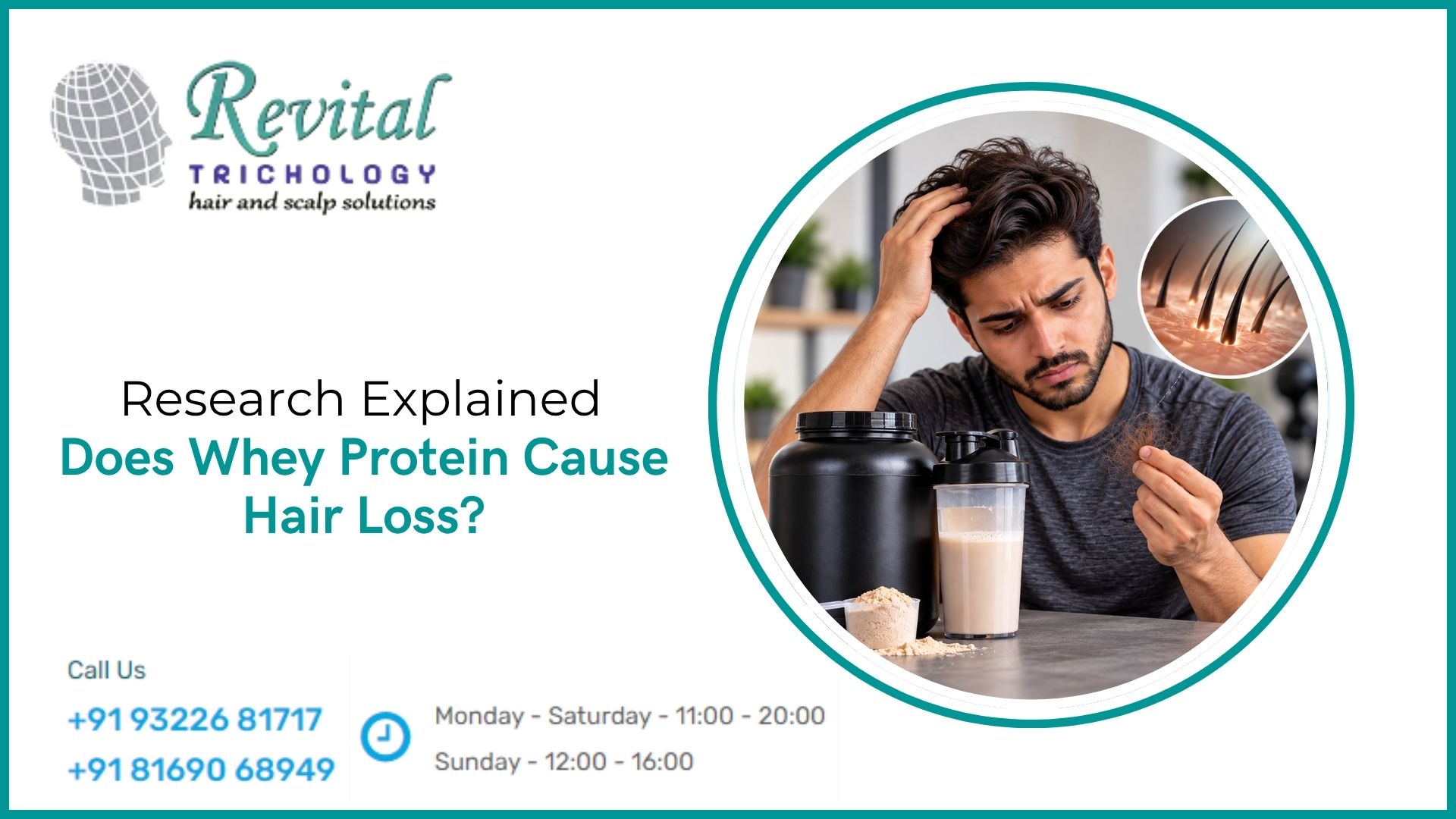
You start going to the gym regularly, increase your protein intake, and add a scoop of whey protein to your daily routine. Everything seems fine until you notice more hair falling out while showering or combing.
Naturally, you begin wondering: Is the whey protein responsible?
This question comes up frequently among people who exercise, especially those already concerned about thinning hair or a receding hairline.
But does whey protein cause hair loss, or is there something else happening?
The answer isn’t as straightforward as many social media posts suggest. While researchers are studying possible connections between whey protein, hormones, and hair growth, there isn’t enough reliable clinical evidence to say that whey protein directly causes hair loss.
Let’s understand what whey protein does, why people associate it with hair fall, and what you should check before blaming your protein shake.
What Is Whey Protein, and Why Do People Use It?
Whey protein is a protein derived from milk during cheese production. It contains all nine essential amino acids that the body cannot produce on its own.
People commonly use whey protein to support muscle recovery, meet their daily protein needs, and maintain muscle mass during exercise.
There are three common forms:
- Whey protein concentrate: Contains protein along with varying amounts of lactose and fat.
- Whey protein isolate: Has a higher protein concentration and generally contains less lactose.
- Whey protein hydrolysate: Contains proteins that have been partially broken down into smaller peptides.
All three forms provide protein, although their processing and nutritional composition differ.
According to the National Institutes of Health, protein supplements can help people meet their nutritional requirements when their regular diet doesn’t provide enough protein.
However, using whey protein for muscle development is different from using it to improve hair growth.
Does Whey Protein Actually Cause Hair Loss?
At present, there is no strong clinical evidence demonstrating that ordinary whey protein consumption directly causes hair loss.
A scientific literature review published in JAAD Reviews in September 2026 examined the possible relationship between whey protein and hair health.
The researchers discussed how whey protein might influence certain hormonal and metabolic pathways. However, they also highlighted that the existing evidence is limited, inconsistent, and largely indirect.
You can read the scientific review on whey protein and hair health for a closer look at the research.
This distinction is important.
Just because someone notices more hair falling after starting whey protein doesn’t mean the supplement caused it.
They might also have changed their diet, started intense exercise, experienced significant weight loss, or developed an unrelated form of hair loss.
Understanding these possibilities is much more useful than immediately stopping every supplement.
Can Whey Protein Increase DHT and Lead to Hair Thinning?
One reason whey protein is frequently blamed for hair loss is its proposed relationship with hormones.
To understand the concern, we need to talk about DHT.
What Is DHT?
Dihydrotestosterone (DHT) is a hormone produced from testosterone.
DHT plays several important roles in the body. However, in people genetically susceptible to pattern hair loss, DHT can contribute to the gradual shrinking of scalp hair follicles.
This process is associated with male and female pattern hair loss.
Does Whey Protein Raise DHT Levels?
You may have heard that whey protein increases DHT and automatically leads to baldness.
However, this claim has not been established through reliable clinical studies.
Researchers have investigated how whey protein might influence insulin, insulin-like growth factor 1 (IGF-1), and other metabolic pathways. But these possible biological effects do not prove that whey protein increases scalp DHT activity or causes hair follicles to shrink.
Someone with hereditary hair loss may experience progressive thinning regardless of whether they consume whey protein.
If you already have a family history of baldness, understanding whether hair loss is genetic may be more useful than assuming your supplement is responsible.
Why Do Some People Notice Hair Fall After Starting Whey Protein?
The timing can make whey protein look suspicious, but several lifestyle changes often happen together when someone begins a fitness routine.
1. Rapid Weight Loss or Crash Dieting
Many people begin using protein shakes while trying to lose weight.
They may reduce carbohydrates, skip meals, or significantly lower their daily calorie intake.
When the body doesn’t receive enough energy or essential nutrients, hair shedding can sometimes increase.
This may lead to telogen effluvium, a condition where more hairs than usual enter the resting phase of the hair growth cycle.
Importantly, the shedding may appear two or three months after the original trigger.
So, if you started whey protein at the same time as an aggressive weight-loss diet, the calorie restriction may be more relevant than the protein powder itself.
Our guide on whether losing weight can cause hair loss explains this connection in greater detail.
2. Not Getting Enough Nutrients From Regular Meals
A protein shake can provide a convenient source of protein, but it cannot replace a balanced diet.
Hair needs more than protein alone.
Iron, zinc, essential fatty acids, and several vitamins support normal body functions involved in hair growth.
For example, iron deficiency may contribute to increased hair shedding in some people.
If someone replaces regular meals with protein shakes, they may unintentionally reduce their intake of other important nutrients.
This doesn’t mean whey protein is harmful. It means overall nutrition still matters.
3. Genetic Hair Loss Becoming Noticeable
Some people begin noticing a receding hairline or thinning crown around the same time they start exercising regularly.
This may simply be when hereditary hair loss becomes visible.
Androgenetic alopecia, also known as pattern hair loss, develops gradually and is influenced by genetic susceptibility and androgen signalling.
It can begin in early adulthood, sometimes before noticeable changes in overall hair density.
If your hairline continues to recede or the crown becomes progressively thinner, the pattern of hair loss deserves attention regardless of your protein intake.
4. Other Fitness Supplements or Medications
Whey protein isn’t always the only product someone starts using during a fitness programme.
Some gym-goers also take pre-workout products, fat-loss supplements, bodybuilding products, or hormone-related substances.
These products can contain very different ingredients.
Anabolic steroids and certain androgenic substances, for example, can worsen pattern hair loss in genetically susceptible individuals.
It’s important not to confuse ordinary protein powder with hormone-based performance-enhancing drugs.
If you’re experiencing unexplained shedding, reviewing every supplement and medication you’re taking can be helpful.
Is Whey Protein Good or Bad for Hair Growth?
Protein is essential for normal hair growth.
Hair is largely made of keratin, a structural protein that helps form the hair shaft.
When someone consistently consumes too little protein, it may affect hair health and contribute to shedding.
The American Academy of Dermatology identifies inadequate protein intake as one possible cause of hair loss.
However, getting more protein than your body needs does not automatically make hair grow faster or thicker.
Whey protein can be a useful dietary option when it helps someone meet their protein requirements. But it isn’t an established hair regrowth treatment.
For most people, the focus should be on getting adequate nutrition through a balanced diet rather than increasing protein powder consumption specifically for hair growth.
Should You Stop Taking Whey Protein If Your Hair Is Falling?
Not necessarily.
If you notice increased hair fall after beginning whey protein, avoid assuming that the two are directly connected.
Instead, consider what else has changed recently.
Ask yourself:
- Have I started eating significantly fewer calories?
- Am I skipping regular meals?
- Have I lost weight rapidly?
- Is there a family history of early baldness?
- Have I started taking any other supplements or medications?
- Am I experiencing unusual stress, illness, or poor sleep?
- Is my hair shedding suddenly, or has it been thinning gradually?
These questions can help you identify possible triggers.
If you suspect a particular supplement is causing unwanted effects, discuss its ingredients and continued use with a qualified healthcare professional.
Stopping whey protein is not an established treatment for genetic hair loss, and continuing it is not a substitute for diagnosing persistent shedding.
When Should You Get a Blood Test for Hair Loss?
Sometimes the reason behind hair thinning isn’t immediately visible.
For example, someone following a restrictive diet may develop low iron stores or other nutritional deficiencies.
A person with thyroid dysfunction may also experience noticeable changes in hair density.
If shedding persists, a professional may recommend investigations depending on your symptoms and medical history.
These may include:
- Complete Blood Count (CBC)
- Serum ferritin or iron studies
- Thyroid function tests
- Vitamin B12 testing
- Vitamin D testing, when clinically appropriate
People looking for a blood test for hair loss mumbai should understand that testing is most useful when guided by an appropriate clinical assessment.
The American Academy of Dermatology’s hair loss diagnosis guide explains how dermatologists assess potential causes before recommending treatment.
Not everyone needs the same blood tests, and a normal result doesn’t rule out genetic or other forms of hair loss.
How Can You Protect Your Hair While Building Muscle?
You don’t need to choose between maintaining your fitness routine and taking care of your hair.
A few practical habits can help.
Eat enough calories. Avoid extreme diets that leave your body without sufficient energy for normal functions.
Meet your protein needs. Use regular foods such as eggs, dal, paneer, curd, beans, fish, or lean meat. Whey protein can supplement these foods when needed.
Include different nutrients. Vegetables, fruits, whole grains, nuts, and seeds provide nutrients that protein powder alone may not supply.
Avoid unnecessary supplements. Don’t combine multiple bodybuilding products without understanding their ingredients and possible risks.
Look after your scalp. Wash your scalp as needed, avoid excessive scratching, and manage persistent dandruff or irritation.
Monitor changes realistically. A photograph of your hairline or parting taken under similar lighting every few weeks can help you notice gradual changes.
If you are concerned about hair thinning solutions mumbai, remember that treatment should depend on the actual cause of thinning rather than the assumption that protein intake is responsible.
When Should You Consult a Hair Specialist?
If your hair continues to thin, your hairline is receding, or you notice bald patches, it may be time to seek professional advice.
A dermatologist can examine your scalp, review your medical history, and determine whether the problem involves temporary shedding, nutritional deficiency, hereditary thinning, or another condition.
At Revital Trichology & Wellness, individuals experiencing persistent hair concerns can explore options for professional hair and scalp assessment.
A proper evaluation can help you understand whether your fitness routine, overall nutrition, medical history, or another factor needs attention.
You can also learn more about available hair loss treatment options in Mumbai.
Conclusion
So, does whey protein cause hair loss?
Current scientific evidence does not establish that ordinary whey protein consumption directly causes hair loss.
Although researchers continue studying potential hormonal and metabolic effects, there isn’t enough clinical evidence to conclude that whey protein causes baldness or that stopping it will restore lost hair.
Hair shedding that begins around the same time as a new fitness routine may be related to other factors, including rapid weight loss, insufficient nutrition, stress, or genetic hair loss.
Instead of blaming one supplement, consider your overall health and the pattern of hair loss.
If thinning continues or becomes noticeable, Revital Trichology & Wellness can be a starting point for exploring professional hair and scalp assessment options.
Frequently Asked Questions
1. Does whey protein cause hair loss in men?
There is currently insufficient clinical evidence to establish that ordinary whey protein causes hair loss in men. Genetic hair loss, nutritional deficiencies, and other factors may be responsible for thinning that happens around the same time.
2. Does whey protein increase DHT?
There is no convincing direct clinical evidence that ordinary whey protein consumption increases DHT enough to cause hair follicle miniaturisation or baldness. More research is needed.
3. Is whey protein isolate better for preventing hair loss?
There is no reliable evidence that whey protein isolate prevents hair loss or is safer for hair than whey concentrate. The main differences relate to processing, protein concentration, and lactose content.
4. Will my hair grow back if I stop whey protein?
Stopping whey protein does not guarantee regrowth. If hair loss is caused by a temporary nutritional or health-related issue, recovery may be possible once the underlying cause is addressed. Genetic hair loss may require specific treatment.
5. Can I take whey protein if I have genetic hair loss?
Whey protein is not known to be a direct cause of genetic hair loss. However, anyone experiencing progressive thinning should seek a proper assessment rather than relying on supplement changes alone.
6. Which protein is best for hair growth?
Hair requires adequate dietary protein, but no particular protein powder has been proven to reverse hair loss. Whey, soy, pea protein, and protein-rich foods can all contribute to meeting nutritional needs. The most suitable option depends on your diet and health requirements.