


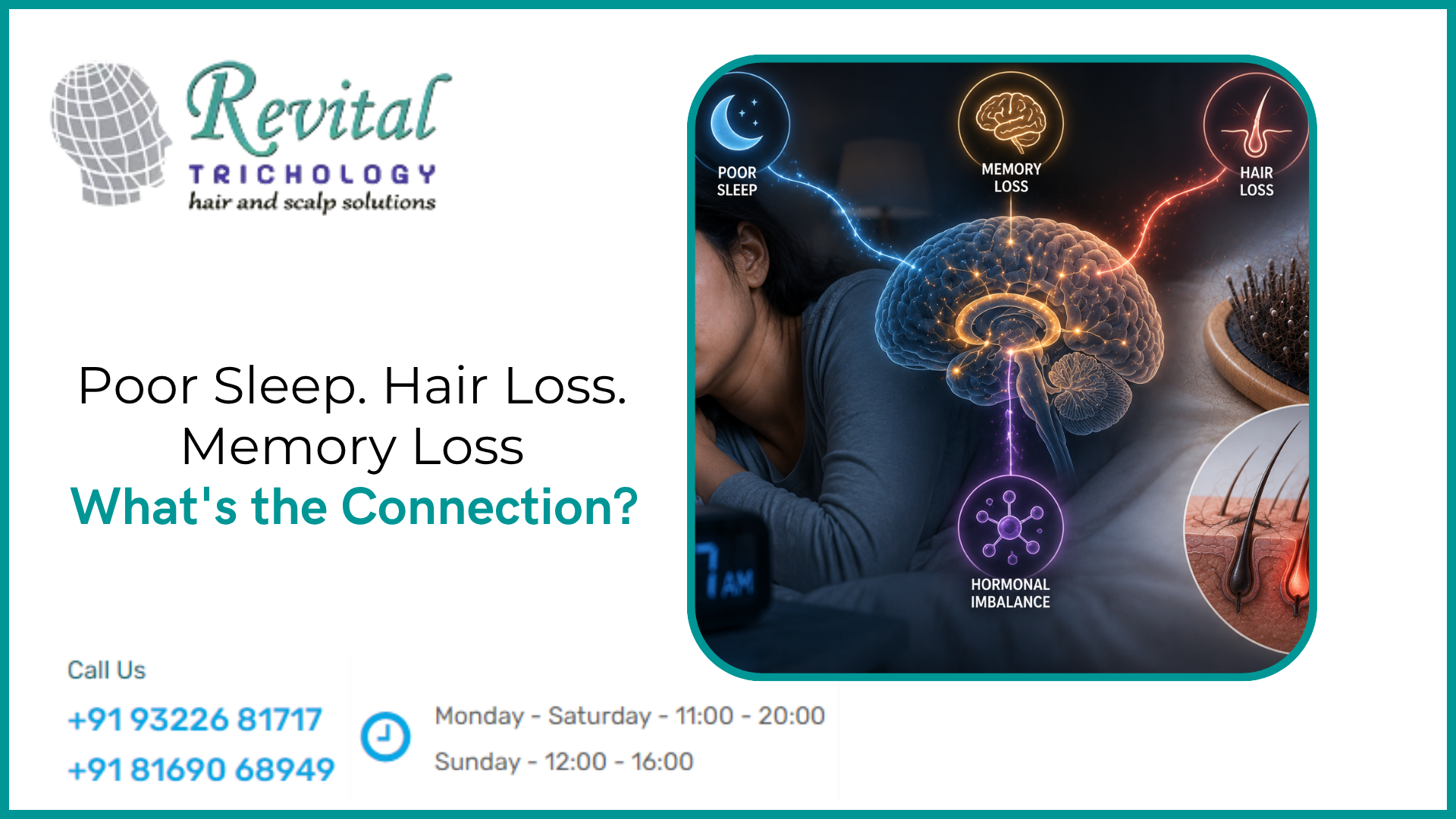
Most people think of sleep as a recovery tool.
You sleep, you wake up, and you get on with your day.
But sleep is doing far more work than most of us realise.
While you’re asleep, your body is repairing tissue, regulating hormones, consolidating memories, processing information, restoring energy reserves, and carrying out thousands of biological tasks that simply cannot happen as efficiently when you’re awake.
This is why poor sleep rarely affects just one area of health.
A person struggling with sleep may notice increased hair shedding. Someone else may find themselves becoming forgetful, mentally slower, or less focused. Others gain weight, feel constantly fatigued, or struggle to recover from everyday stress.
At first, these symptoms seem unrelated.
In reality, they often have a common thread.
Researchers continue to uncover how sleep influences everything from hair follicle activity to brain function, hormone regulation, metabolism, and long-term health. The connection is much stronger than most people realise.
When sleep becomes a problem, the body notices before you do
One of the most interesting things about sleep deprivation is that its effects often begin long before a person recognises them.
People adapt surprisingly well to feeling tired.
They push through.
Drink more coffee.
Assume stress is the cause.
Tell themselves they’ll catch up on sleep over the weekend.
Meanwhile, the body is quietly operating with fewer resources than it needs.
The consequences don’t always appear immediately.
Instead, they tend to develop gradually.
You may notice:
- More hair in the shower drain
- Increased forgetfulness
- Difficulty concentrating
- Mood changes
- Reduced energy
- Poorer recovery from exercise
- Greater reliance on caffeine
Because the changes happen slowly, they are often dismissed as normal.
They are not always normal.
Sometimes they are signs that the body’s recovery systems are struggling.
Why your brain depends on sleep more than any productivity hack
People spend a lot of time looking for ways to improve focus.
Supplements.
Productivity systems.
Brain-training apps.
Yet one of the most important influences on brain function remains something far less glamorous.
Sleep.
During sleep, the brain is not shutting down.
It is incredibly active.
Among other tasks, it helps:
- Process information from the day
- Consolidate memories
- Strengthen learning pathways
- Remove metabolic waste products
- Regulate emotional responses
This is why poor sleep often produces symptoms that feel cognitive before they feel physical.
People frequently describe:
“I know what I want to say, but I can’t find the words.”
Or:
“I walk into a room and forget why I’m there.”
Or:
“I used to remember things much more easily.”
These experiences are common among individuals whose sleep quality has been compromised for extended periods.
The relationship between sleep and memory is not accidental
Memory formation relies on specific stages of sleep.
Without adequate sleep, the brain struggles to organise and store information efficiently.
Imagine trying to save a document while constantly disconnecting the computer from power.
Some information gets stored.
Some doesn’t.
The process becomes unreliable.
This is one reason students, professionals, and older adults often notice memory changes when sleep quality declines.
The brain may still function.
It simply functions less efficiently.
Over time, that inefficiency becomes noticeable.
What does this have to do with hair loss?
Quite a lot, actually.
Hair follicles are among the most active structures in the body.
They are constantly producing new cells, building hair fibres, and cycling through growth and shedding phases.
All of this activity requires resources.
When sleep becomes chronically disrupted, several biological systems involved in hair growth can be affected.
These include:
- Hormonal regulation
- Stress response pathways
- Cellular repair mechanisms
- Inflammatory processes
- Energy production
Hair follicles are sensitive to changes in all of them.
This is one reason excessive shedding sometimes follows periods of prolonged stress, illness, burnout, or poor sleep.
The follicle is responding to a change in the body’s internal environment.
The cortisol connection
Sleep and stress are closely linked.
When sleep quality declines, the body’s stress response often becomes more active.
One hormone frequently involved is cortisol.
Cortisol itself is not the enemy.
The body needs it.
Problems arise when elevated stress and poor recovery become chronic.
Persistently disrupted sleep may contribute to:
- Increased stress sensitivity
- Greater fatigue
- Reduced recovery capacity
- Changes in hair growth patterns
This does not mean every case of hair loss is caused by cortisol.
Hair biology is rarely that simple.
However, the interaction between sleep, stress, and follicular health is difficult to ignore.
Why poor sleepers often feel older than they are
Many people describe the same experience.
They are technically healthy.
Yet they feel as though they are operating at 70 or 80 percent of their potential.
Energy declines.
Motivation decreases.
Mental sharpness fades.
Hair quality changes.
Recovery takes longer.
Sleep deprivation affects multiple systems simultaneously, which is why the impact often feels larger than any individual symptom.
The body becomes less resilient.
That reduced resilience tends to show up everywhere.
The hidden effect on decision-making
One consequence of poor sleep that receives less attention is impaired judgement.
People often associate sleep deprivation with tiredness.
The cognitive effects can be equally important.
Research consistently shows that insufficient sleep can affect:
- Attention
- Decision-making
- Reaction time
- Problem-solving
- Emotional regulation
In practical terms, this may look like:
- Increased mistakes at work
- Difficulty concentrating during conversations
- Forgetting appointments
- Reduced productivity
These changes can develop gradually enough that people fail to recognise how strongly sleep is influencing their daily performance.
Why recovery happens during sleep, not during treatment
This is an important concept.
People often focus on interventions.
The supplement.
The medication.
The treatment.
The exercise programme.
All of these may be valuable.
But recovery itself largely occurs when the body has an opportunity to repair.
Sleep provides that opportunity.
Without adequate sleep, even the best health strategies may produce less impressive results than expected.
The body cannot fully restore itself if recovery time remains consistently compromised.
Sleep is often the missing piece in health investigations
When people experience ongoing hair loss, memory changes, fatigue, or reduced wellbeing, they frequently look for complex explanations.
Sometimes the answer is complex.
Sometimes it isn’t.
Sleep is one of the most commonly overlooked variables in health.
Not because it is unimportant.
Because it is familiar.
People underestimate familiar things.
Yet improving sleep quality often creates positive effects across multiple areas of health simultaneously.
That alone makes it worth taking seriously.
Looking at the bigger picture
Hair loss.
Forgetfulness.
Mental fatigue.
Poor concentration.
Reduced energy.
It is tempting to view these as separate concerns.
The body rarely does.
Biological systems are deeply interconnected.
When recovery suffers, multiple systems feel the impact.
This is why sleep deserves far more attention than it often receives.
Not as a wellness trend.
Not as a lifestyle hack.
As a fundamental requirement for healthy cellular function, healthy hair growth, and healthy brain function.
Conclusion
The connection between poor sleep, hair loss, and declining memory is stronger than many people realise. Sleep influences hormone regulation, stress responses, cellular repair, cognitive performance, and brain function, all of which can affect how we feel, think, and recover. When sleep quality deteriorates over time, the consequences may become visible through increased hair shedding, mental fatigue, forgetfulness, reduced focus, and a general decline in resilience.
At Revital Trichology & Wellness, we understand that hair loss is often part of a much bigger picture. Alongside scalp and follicular health, factors such as stress, recovery, metabolic function, nutrition, and sleep quality can influence long-term hair outcomes. By looking beyond the visible symptom, it becomes possible to identify contributors that might otherwise be missed and create more comprehensive strategies for both hair health and overall wellbeing.
Frequently Asked Questions
Can poor sleep really cause hair loss?
Poor sleep can contribute to biological changes involving stress hormones, recovery mechanisms, and inflammation, all of which may influence hair growth and shedding patterns over time.
How does sleep affect brain function?
Sleep plays an essential role in memory formation, concentration, learning, emotional regulation, and information processing. Inadequate sleep can make these processes less efficient.
Why do I feel forgetful after several nights of poor sleep?
The brain relies on sleep to organise and store information. When sleep quality is compromised, memory consolidation becomes less effective, which can lead to increased forgetfulness.
Can stress-related hair loss be linked to sleep problems?
Often, yes. Chronic stress and poor sleep frequently occur together, and both can influence the biological processes involved in healthy hair growth.
How much sleep is generally considered healthy for adults?
Most adults function best with around seven to nine hours of quality sleep per night, although individual requirements can vary.
Can improving sleep quality help reduce hair shedding?
If poor sleep is contributing to increased shedding, improving sleep habits may support overall recovery and create better conditions for healthy hair growth.
What signs suggest that poor sleep is affecting overall health?
Persistent fatigue, reduced concentration, memory issues, mood changes, increased hair shedding, and slower recovery from daily stressors may all indicate that sleep quality deserves closer attention.